


Snowflake Science with Printable


Studying snowflake science has been a favorite in our homeschool. Living in the southern US, we do not get much snow, so, we’ve sometimes have to make our own. But when it does snow we build snowmen, have snowball fights, and have even constructed a snow fort, which we covered with water and turned into an igloo that lasted for weeks!
Regardless of which snow activity is your favorite, all this winter fun starts with the same basic building block- the snowflake. Why not take advantage of the season of snow and study snowflake science?
Table of Contents
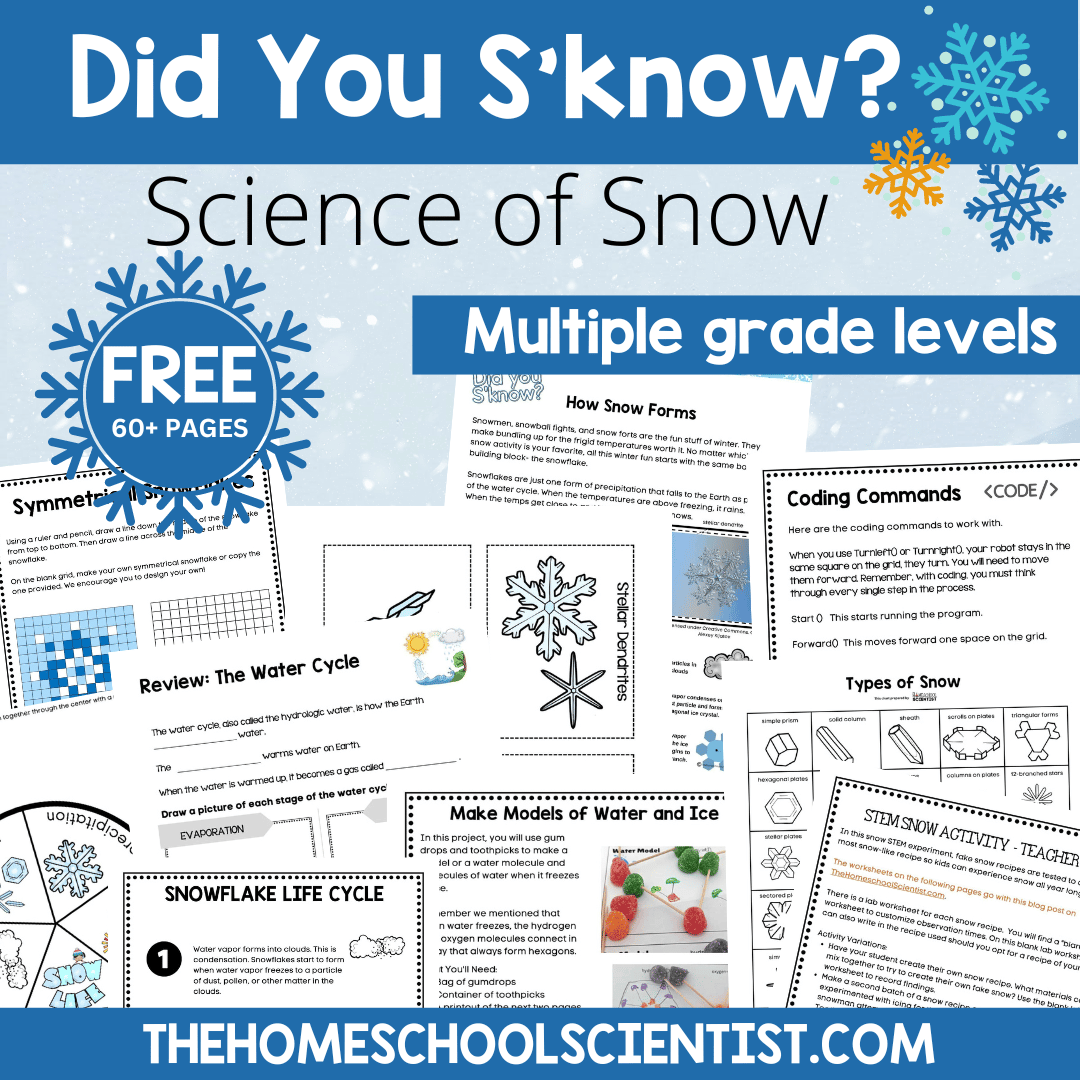
FYI, we have prepared a free printable snowflake science lesson (over 60 pages) that is available as a free download. (See below.)
Snow Science – Fun Facts About Snow
Snowflakes are just one form of precipitation that falls to the Earth as part of the water cycle. When the temperatures are above freezing, it rains. When the temps get close to and below freezing, it snows.
Let’s start this study of snowflake science with some snowflake fun factoids:
- At least 1,000,000,000,000,000,000,000,000 (1 septillion) ice crystals fall from the sky in the U.S. alone. That is a 1 followed by 24 zeros. (Have your students write that number. 😊)
- In 1921 75.8 inches of snow fell between April 14 at 2:30 p.m. and April 15 at 2:30 p.m. in Silver Lake Colorado. This was the most snow to fall within a 24-hour period in the United States.
- The largest snowflake measured 15 inches. (Have your students measure this out on the floor or a tabletop.)
- On February 2, 2009, it snowed so much in the United Kingdom, that it was enough snow for every person living there to make 251,800 snowballs each! That would make for a lengthy and epic snowball fight.
How Are Snowflakes Formed?
The falling snowflakes you see start as a single snow crystal.
Snowflakes form when water vapor freezes to a particle of dust, pollen, or other matter in the clouds. As this tiny particle of ice moves through the clouds, more water vapor freezes into it. Eventually, this process creates a snowflake that is heavy enough to fall from the clouds to the Earth.
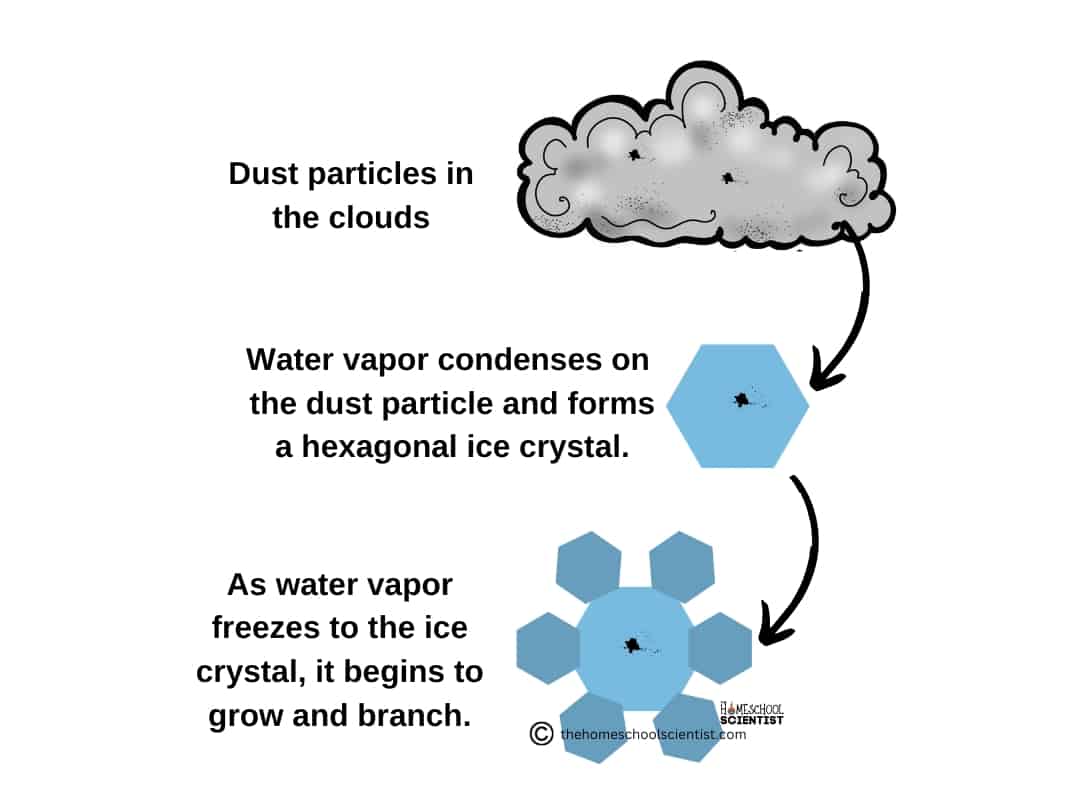
As more and more water vapor freezes onto the particle, a snowflake forms. This process is called nucleation.
Eventually, the snowflake is heavy enough to fall from the clouds to the Earth. Notice that snow forms from water vapor, not raindrops. When temperatures in the atmosphere drop below 0°C (32°F), water vapor condenses directly into ice without going through the liquid stage.
You may also hear people use the term snow crystals. Snow crystals are a single crystal of ice that is hexagonal in shape. A snowflake can be a single ice crystal or a group of ice crystals stuck together.
Snow can fall in tiny, delicate flakes or huge, fluffy clumps. If you look closely, you will see that the tiny flakes are individual flakes, and the fluffy snow is made up of many snowflakes clustered together.
The atmosphere’s temperature determines snowflake size as it is forming. Snowflakes tend to be smaller when the temperature in the troposphere (the atmospheric level where snow typically forms) is well below freezing (32 degrees Fahrenheit or 0 degrees Celsius). These flakes contain little water and are considered “dry snow.”
When the troposphere is near or slightly above freezing, snowflakes melt somewhat. The resulting layer of water on the snowflakes causes them to stick together and creates large, fluffy snow clumps. We call this “wet” snow, which is great for making snowmen and snowballs.
Snowflake Science – Why Are Snowflakes Always Six Sided?
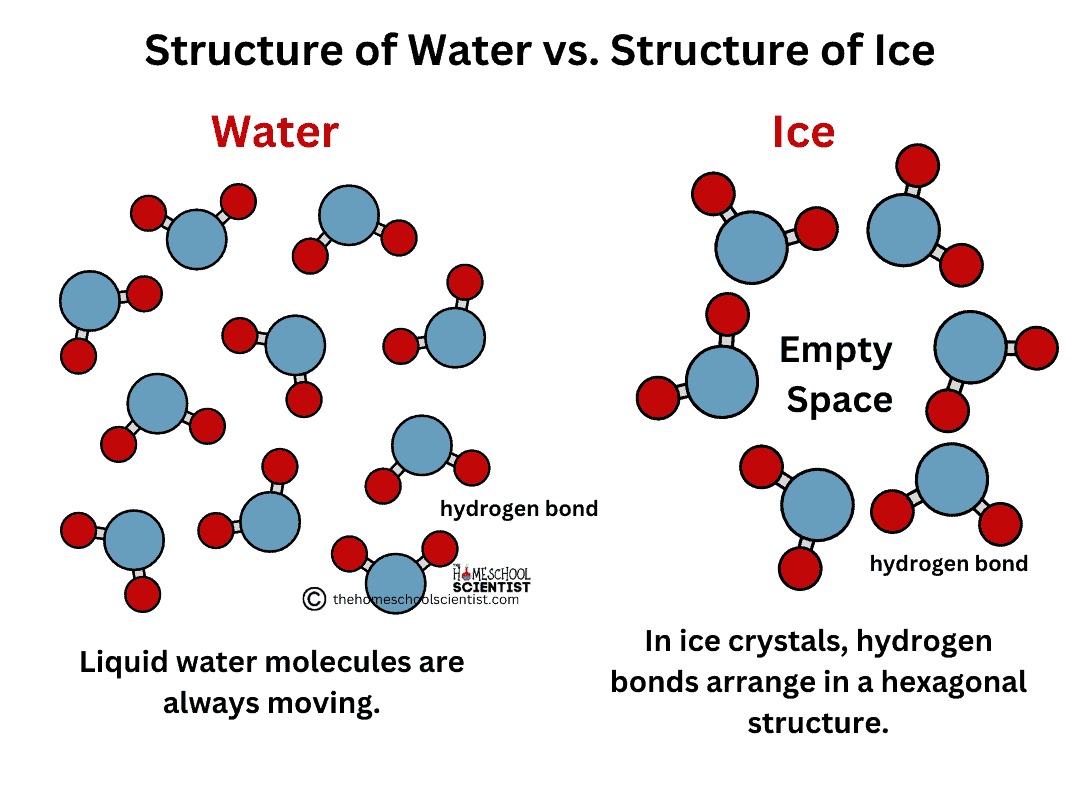
The beautiful six-sided structure of snowflakes comes from the hexagonal lattice structure of ice. When water freezes, the molecules connect together and always form hexagons. As more molecules are added, they form branches on each of the six sides.
Is Each Snowflake Unique in Size, Shape, and Composition?
It is probably true that each snowflake is unique because at the molecular level, it is difficult for two snowflakes to be identical.
Given that it can take up to 100,000 water vapor droplets to make each snowflake. It is highly improbable that all 100,000 droplets of one snowflake could arrange themselves exactly the same way as another.
Snowflake variations, like snowflake size, are determined by the temperature and humidity of the atmosphere while the snowflake is forming. Temperature and humidity will vary within the atmosphere. Plus, as the ice crystals move down through the clouds, they are carried by wind currents, which can also affect the way ice crystals form.
It can take up to 100,000 water vapor droplets to make each snowflake. It is highly improbable that all 100,000 droplets of one snowflake will experience the same wind currents, temperature, humidity, and path.
The arrangement of these vapor droplets in each snowflake is dependent upon the temperature and moisture levels of the clouds.
Kenneth Libbrecht, Professor of Physics at the California Institute of Technology, observed that snowflakes formed below -22 degrees Celsius (-7.6 degrees Fahrenheit) have simpler shapes than those formed in warmer temperatures.
Scientists have observed that the most complex snowflake patterns form when there is a higher humidity level in the air. Drier air seems to produce snowflakes with simpler patterns.
This diagram from www.snowcrystals.com shows how humidity and temperature relate to snowflake shapes.
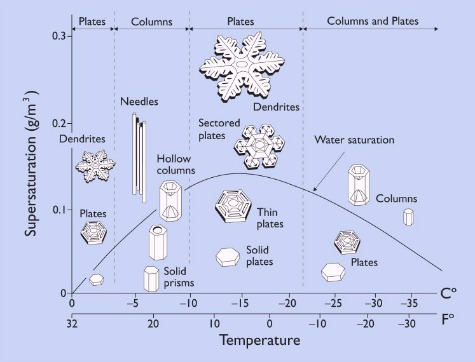
Image credit: Snowcrystals.com
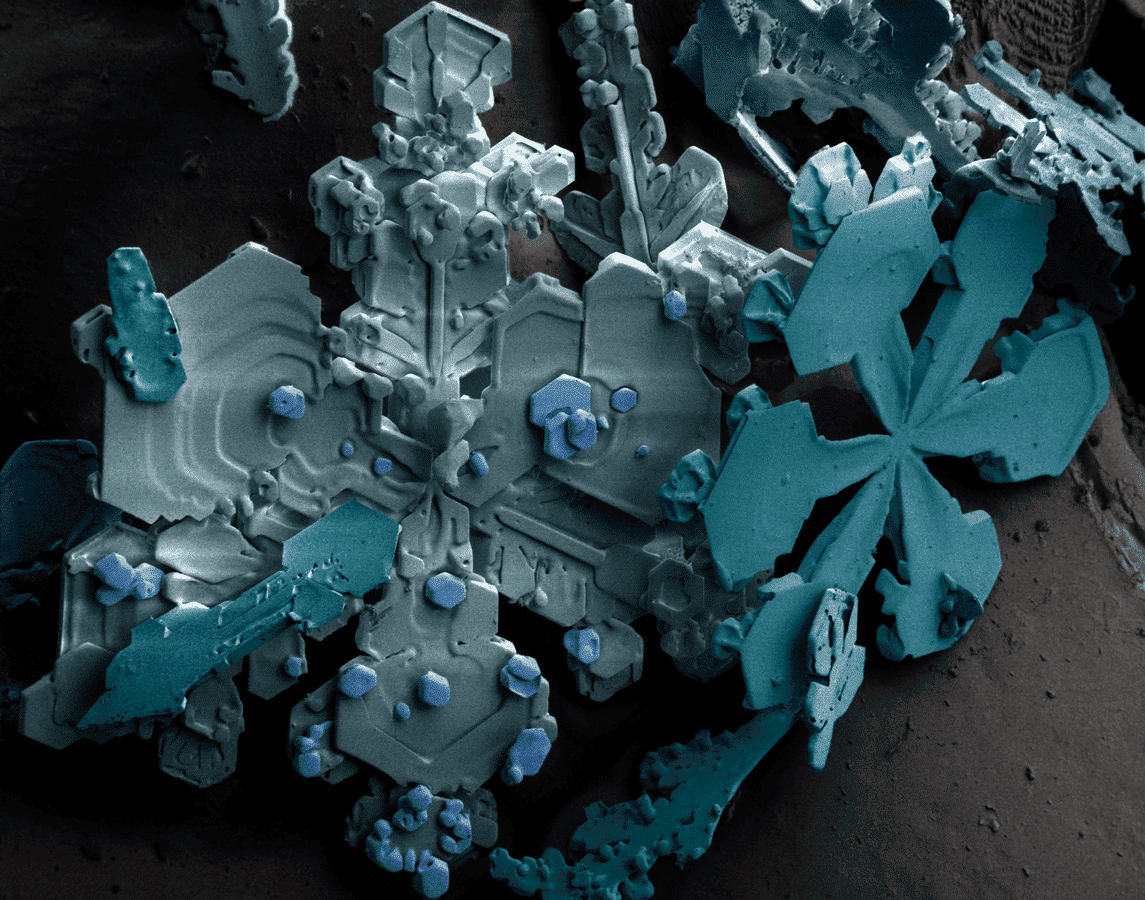
Snowflakes can be found in hexagon shaped plates, lacy dendrites, needles and columns. Which one of these have you seen in the wintertime?
There are 35 snow crystals that are grouped into one of 7 different crystal types:
- Hexagonal Plates
- Stellar Plates
- Stellar Dendrites
- Fernlike Stellar Dendrites
- Needles
- Columns
- Bullets
- Irregular Shapes
- Rimed Crystals
Snow Science – Why Does It Seem So Quiet When There is Snow on the Ground?
Why Does It Seem So Quiet When There is Snow on the Ground?
There is space between the snowflakes, so the snow can absorb the sound waves rather than having the sound waves bounce off the snow-covered ground.
However, if the snow starts to melt, then refreezes, the space between the water molecules in the snowflakes is reduced, and the sound waves bounce off this surface.
Download the FREE Snow Science Printable Pack with Lessons and Activities.
This free printable is sponsored by CTCMath.
CTCMath is an award-winning math curriculum for Kindergarten through Calculus. If you’re looking for a math curriculum to lift your child’s math confidence and can be used by all of the different grade levels in your homeschool, try out the CTCMath free trial. One affordable price covers your entire family for one full year. Try their FREE trial and see how this adaptable curriculum can be your math solution.

Other Winter Activities to Enjoy with the Snow Study
Check out the round up of other activities and resources to use alongside our snow study.
Snowflake Science Videos
This is an excellent video with animations showing how snowflakes begin as crystals and grow. The photos and imagery are interesting for all ages, the content and vocabulary is best for middle school through adults. Truly fascinating images and informational!
Here is a video explaining snowflake formation and featuring images captured by a high-speed camera.
This video provides information and explanation for the younger scientist:
Learn about snow plows and enjoy a FUN STEM activity
How Can You Capture Your Own Snowflake
If you want to capture snowflakes of your own to observe, you need the following:
- a cold, winter day
- a black piece of foam board or paper
- a magnifying glass
Place the black paper or foam board outside, but out of the snow, for 15 – 20 minutes, or until snowflakes can land on it and not melt immediately. When the paper is cold enough place the paper on a level surface or hold it carefully where snowflakes can fall on it. Observe the collected snowflakes with the magnifying glass quickly before they disappear.
More Snowflake Science Resources
Free printable – Ice, penguins, Antarctica
Make a “Frosty” Window – Easy and quick crystal formation chemistry activity
Snow STEM Experiment with Printables
Make Your Own Crystal Snowflake

I hold a master’s degree in child development and early education and am working on a post-baccalaureate in biology. I spent 15 years working for a biotechnology company developing IT systems in DNA testing laboratories across the US. I taught K4 in a private school, homeschooled my children, and have taught on the mission field in southern Asia. For 4 years, I served on our state’s FIRST Lego League tournament Board and served as the Judging Director. I own thehomeschoolscientist and also write a regular science column for Homeschooling Today Magazine. You’ll also find my writings on the CTCMath blog. Through this site, I have authored over 50 math and science resources.