


Sand Dollars & Facts About Sand Dollars
Living in the southeastern United States, we have visited beaches along the Virginia, North Carolina, South Carolina, Georgia, Florida (Atlantic and Gulf side), and Alabama coast lines. I can tell you sand dollars are elusive creatures! We found them all over the beach on Jekyll Island, Georgia. Most of the photos in this post are from our visits.
Let’s take a close look at these fascinating creatures.
Facts About Sand Dollars
Do Sand Dollars Sting and Are Sand Dollars Dangerous?
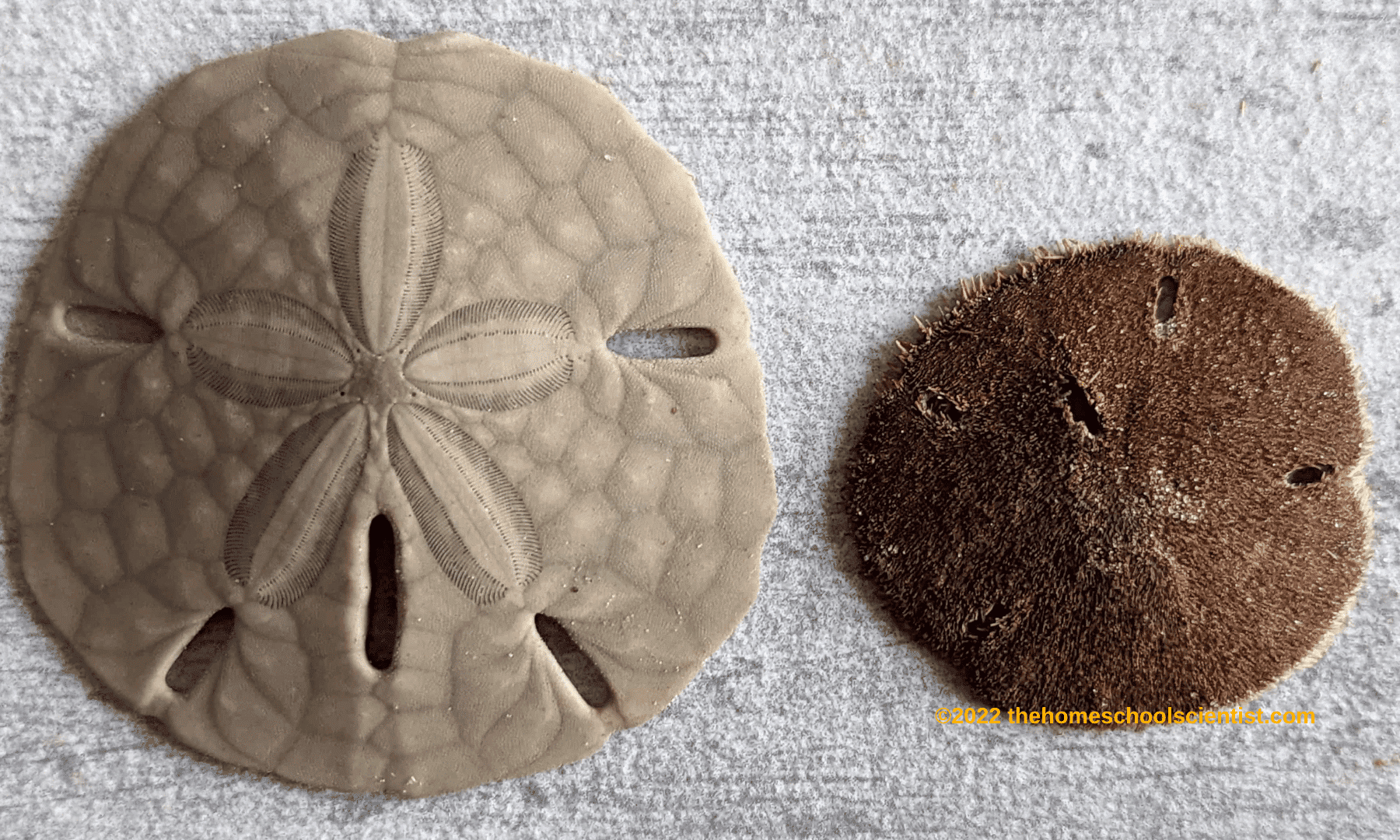
While sand dollars do have spines, they are soft and do not pose any threat to humans beyond some minor scrapes.
However, living sand dollars emit a yellowish substance known as echinochrome. We should always be cautious when handling live wild animals and be respectful of their well-being.
Sand dollars do not sting. Living sand dollars are covered with tiny, short spines that help them move and burrow into the sand. These spines give them a fuzzy or velvety appearance.
Observe living sand dollars without removing them from their habitat. For a closer study at home, use an empty test, the skeleton left behind after a sand dollar dies.
What Are Sand Dollars?
Sand dollars are marine animals belonging to the phylum Echinodermata, a group that also includes sea stars, brittle stars, and sea cucumbers. Within this group, sand dollars belong to the class Echinoidea, along with other sea urchins.
There are many species of sand dollars, each with its own scientific name. Their size, shape, color, and habitat vary by species, but all have hard skeleton called a test.
Sand Dollar Anatomy
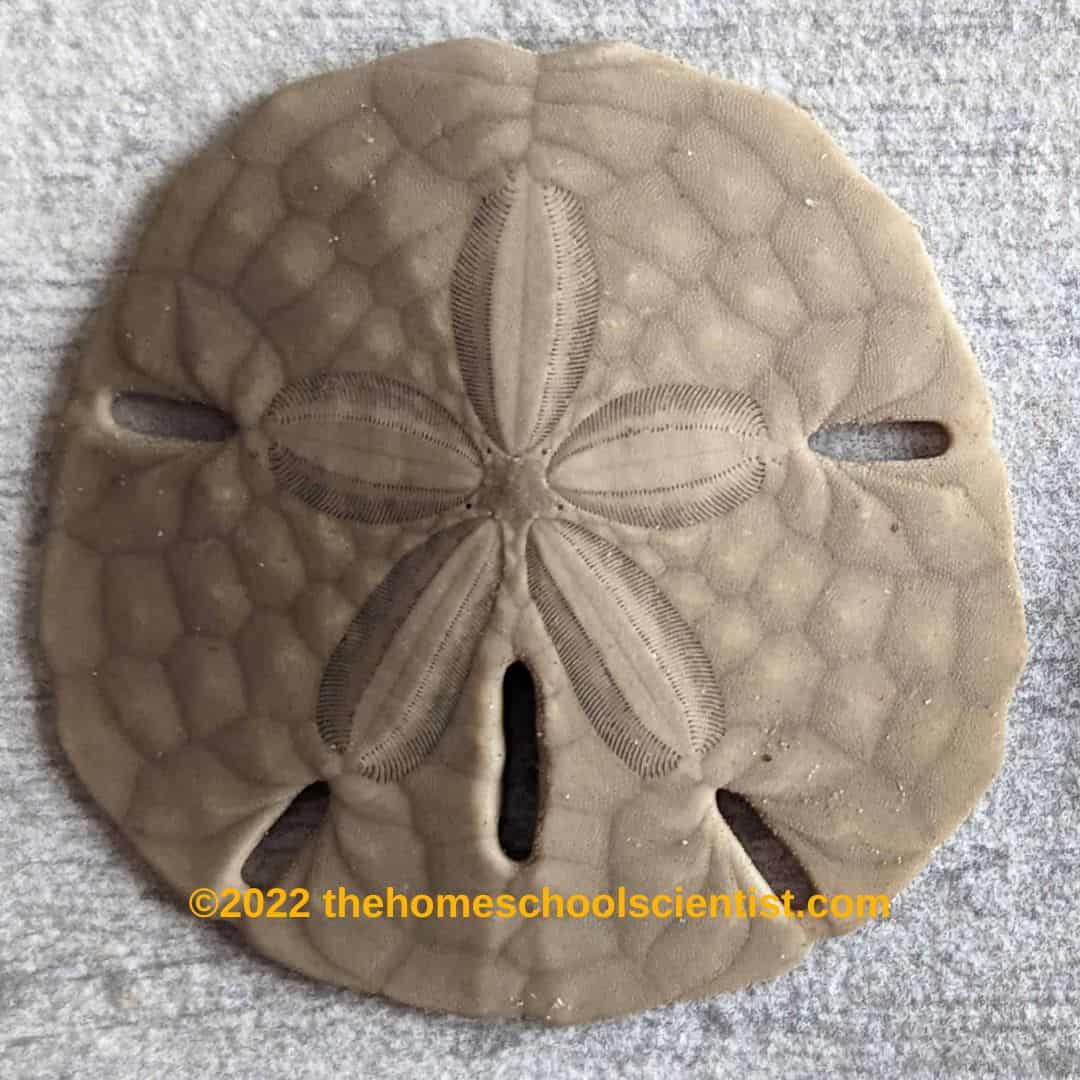
A sand dollar’s hard skeleton is called a test. It is made of tightly joined calcium carbonate plates and lies beneath a thin layer of skin in the living animal .Sand dollars have flattened bodies. The flowerlike pattern on the upper surface of the test reflects their five-part body organization.
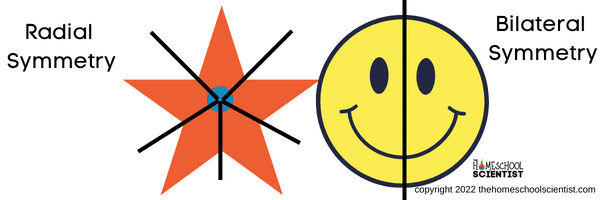
Sand dollars have an interesting combination of symmetry. The flowerlike pattern on their upper surface reflects a five-part body arrangement called pentaradial symmetry. However, sand dollars also have a front and back, with corresponding left and right sides, giving them bilateral symmetry.
The bottom surface where the mouth is located is called the oral side. The upper surface is called the aboral side. Inside the mouth is a feeding structure called Aristotle’s lantern, which includes five toothlike sections used to grind food.
Age – Lifespan of Sand Dollars
Sand dollar lifespans vary by species. The eccentric sand dollar, for example, lives six to ten years. Scientists can estimate a sand dollar’s age by examining growth rings in the plates of its hard skeleton, called the test. These growth markings are somewhat like the annual rings used to estimate a tree’s age.
Look at the photo above. How many rings do you count? To me it looks like 7-(ish!)
Where do Sand Dollars Live?
Sand dollars live in oceans around the world. Many species inhabit sandy or muddy seafloors in coastal waters, where they can burrow into the sediment. Their geographic range and water depth vary by species.
For example, the eccentric sand dollar lives along the Pacific coast from Alaska to Baja California. They usually live in shallow waters just below the low-tide line and prefer mud-dense patches. However, they can be found just off the beach to one hundred and thirty feet down.
What Do Sand Dollars Eat?
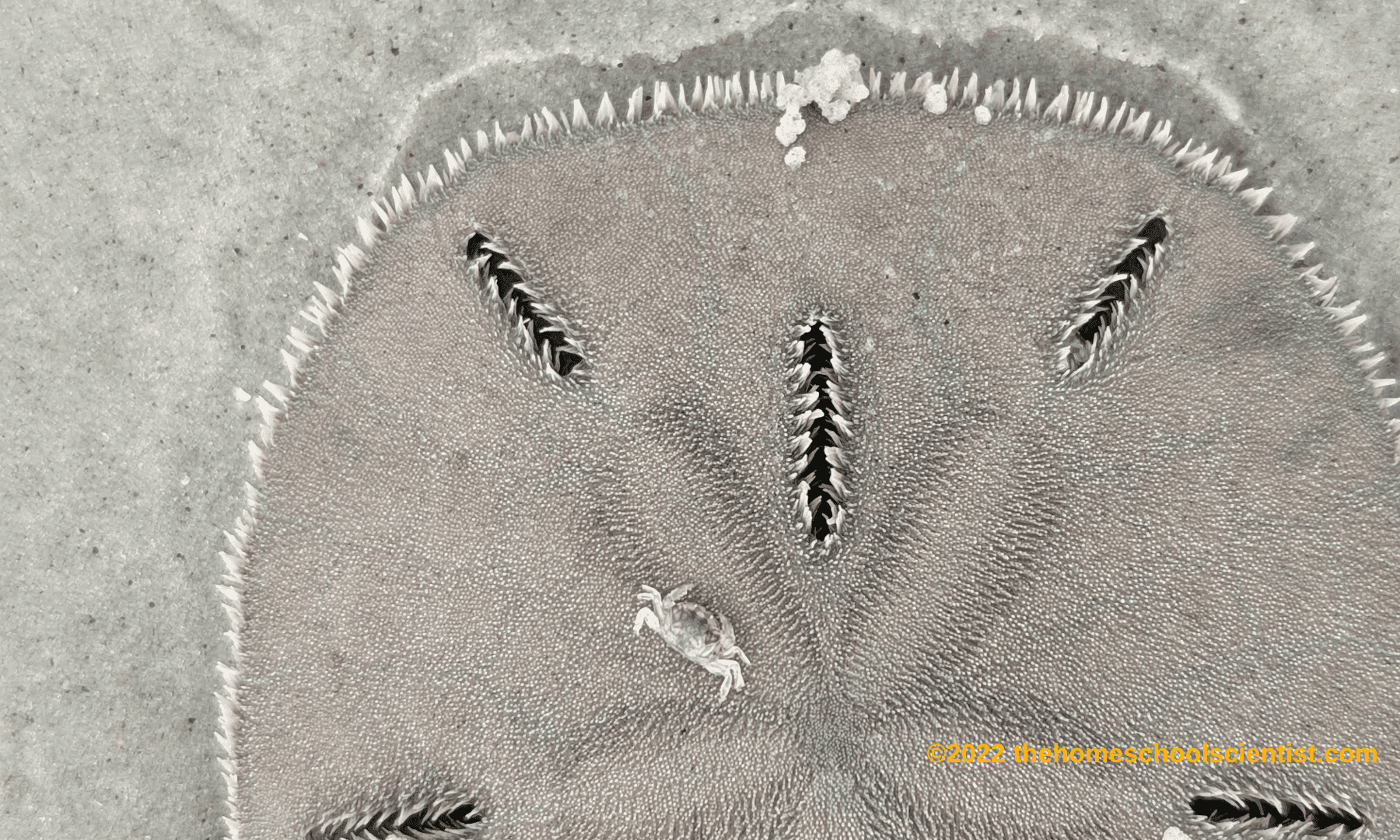
Can you see the tiny crab on the sand dollar’s body in the photo above? This is why I love to take time out to really observe details. If you’re out on a hike or with your kids on a nature walk, stop and take some extra time to look for the small happenings that are around you!
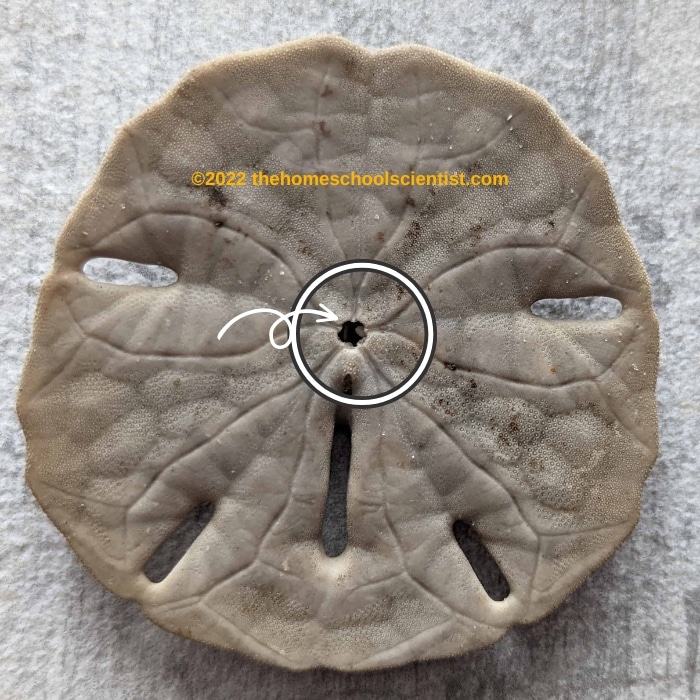
The mouth of the sand dollar is located in the middle of its underside. Tiny particles of food from the water or sand get trapped in the spines of the sand dollar and then are moved toward the mouth by small hairs called cilia. Did you know that cilia means eyelashes in Latin?
When the waters are calm, sand dollars will orient themselves upright and bury themselves halfway out of the sand. They can easily catch tiny, free-floating organisms such as larvae, algae, and diatoms in this position. When conditions are rough, they lie flat and burrow into the sand. Sand dollars are omnivorous.
A sand dollar’s mouth is located on the underside of its body. Its anus is toward the rear, either on the underside or near the edge, depending on the species. Below is a close-up photo of the mouth area.
Food travels through the esophagus, stomach, and intestine, where it is digested and nutrients are absorbed. Undigested materials leave through the anus. In the eccentric sand dollar, digestion can take up to two days!
Some sand dollars have openings through their tests called lunules. These openings allow water to pass through, helping reduce the lifting force of currents and waves so the animal can remain on the seafloor.
The slits on the top side are the lunules. It helps the sand dollar stay anchored in the water.
But, if waters become choppy, sand dollars will lay themselves flat and bury themselves if need be. While flat or buried, sand dollars will use their spines and cilia on their bottom halves to capture and ingest edible debris beneath them.
Do Sand Dollars Have Teeth?
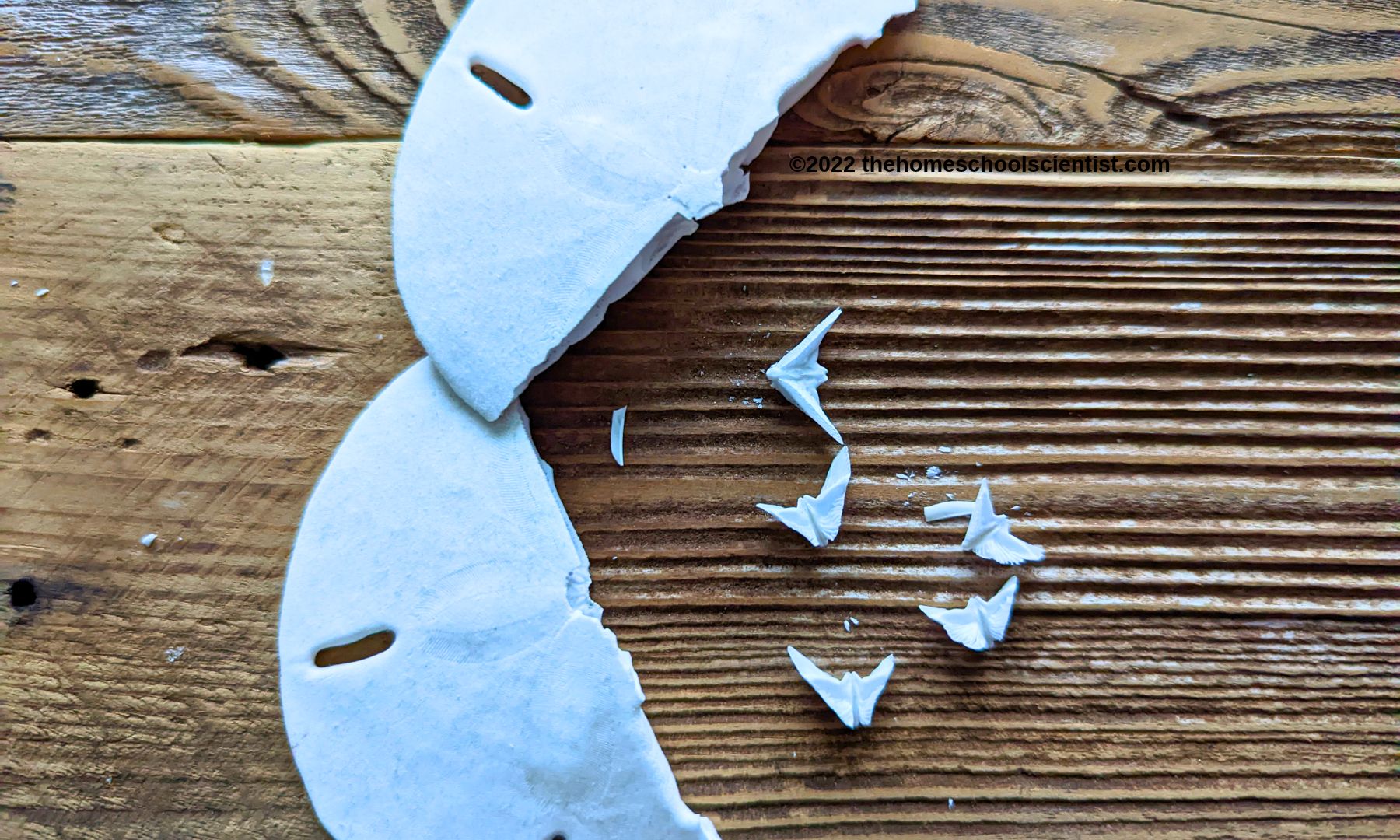
Yes, sand dollars do have mouth parts that resemble and work like teeth. Pictured below are the five mouth parts we retrieved from a sand dollar we found over 15 years ago. For the sake of this sand dollar study, we did crack open this one.


As larvae, sand dollars depend almost exclusively on microscopic plankton to sustain themselves until they grow into adulthood.
Resources for an Ocean Life Study


Any of the ocean life books by Susan Tate make a nice addition to an ocean life study.
How Do Sand Dollars Move?
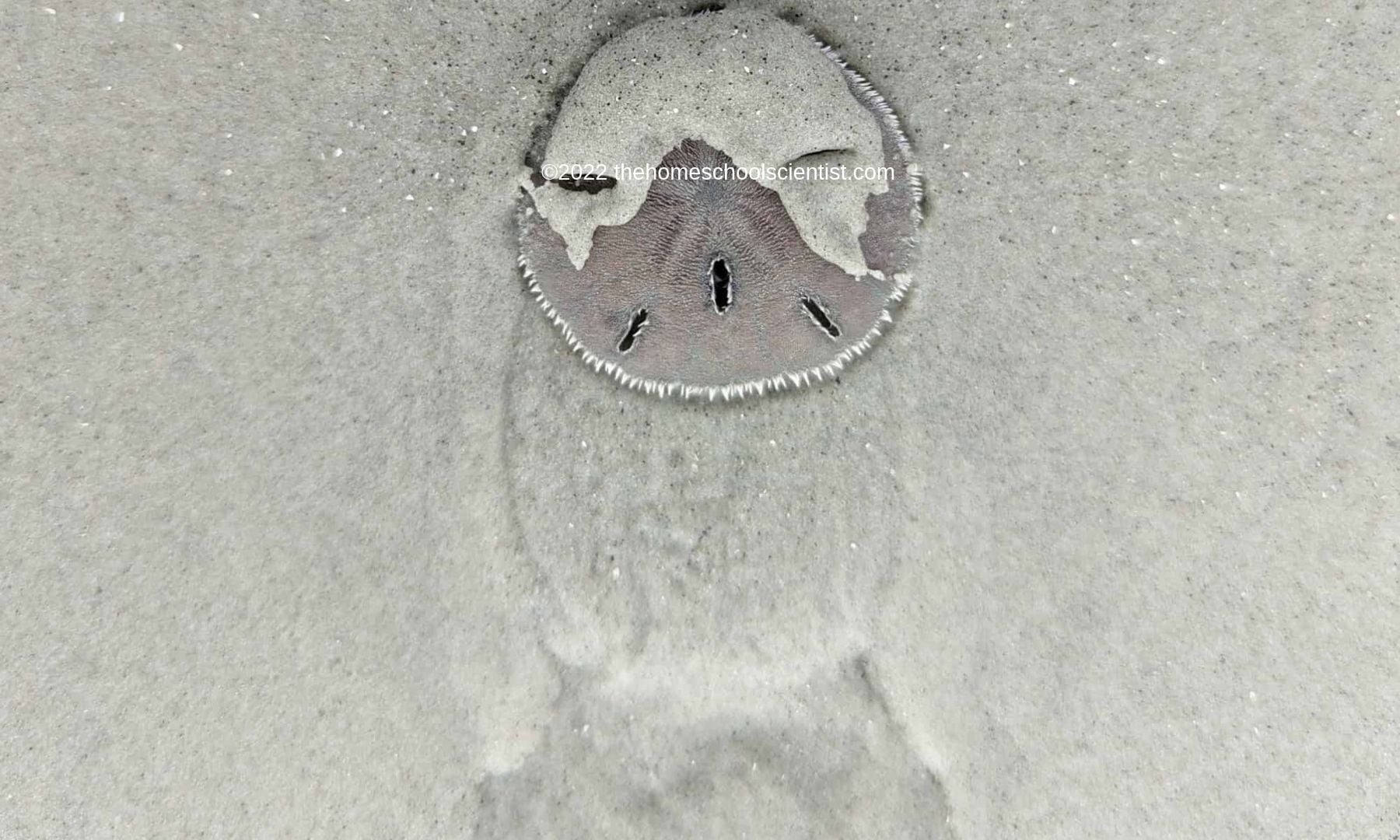
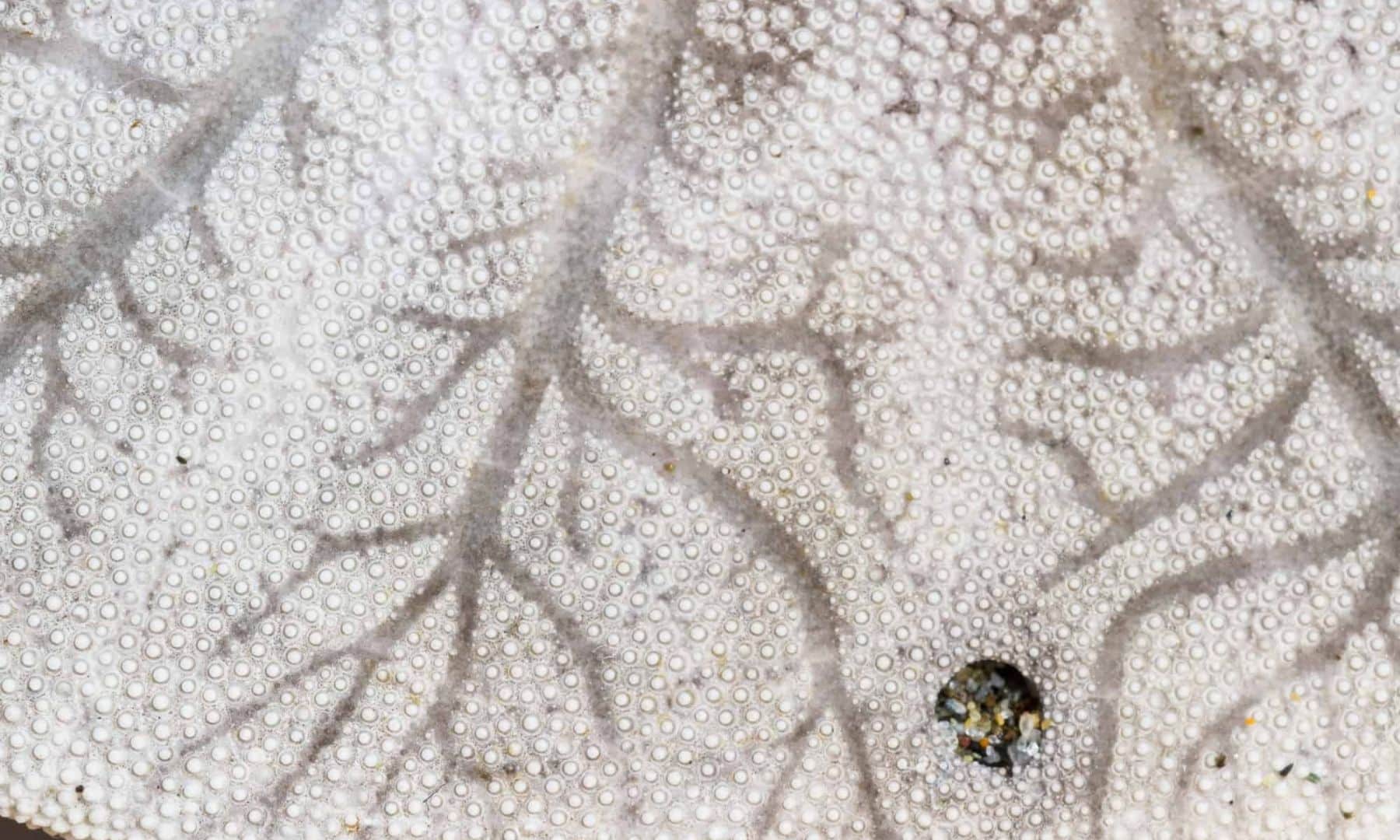
Sand dollars have spines that help them move through the sand. The spines dry up and fall off after the sand dollar dies. In the photo below, you can see the trail left behind by the sand dollar as it slowly moves along the shore.
How Do Sand Dollars Reproduce?
Sand dollars participate in a unique form of reproduction known as broadcast spawning. Sand dollars often live in giant colonies, with over 600 individuals in one congregation. These 600+ sand dollars may occupy less than one square yard!

When they are ready to mate, the males and females will release their respective gametes in the water, with males and females able to produce hundreds of thousands of eggs and sperm per year.
The gametes freely mingle and combine into zygotes, eventually becoming embryonic sand dollars that float throughout the ocean’s currents as they develop.
It takes around three months for a sand dollar to fully mature.
While the adults only reproduce sexually, it has been observed that larval sand dollars can clone themselves. This usually occurs when food and temperatures are optimal or when the larvae are near a predator. In the latter instance, they will clone themselves in an attempt to survive and distract the predator.
Once the larvae have developed long enough, they anchor themselves to the seafloor and undergo metamorphosis, resulting in a juvenile stage. In this stage, they remain on the seafloor to collect larger quantities of food, and juveniles who live in strong currents will ingest sand to weigh down their bodies.
Are Sand Dollars Endangered?
Sand dollars are not considered endangered species but are all threatened by many anthropogenic issues.
All stages of sand dollar development are considered necessary for the diets of many other marine species, with their biggest predators being fish, sea stars, crabs, and other marine life that consume tiny larvae. Direct threats to the well-being of sand dollars include industrial fishing, bottom trawling, and direct harvesting by divers for aesthetic purposes. Other threats include the overall pollution of the oceans.
Other Fun Facts About Sand Dollars
- The name sand dollar comes from the resemblance of its pale, empty test to old American and Spanish coins.
- Calcium carbonate, the material that makes up a sand dollar’s test, is also an active ingredient in some antacids people use to relieve heartburn and acid indigestion.
- Humans and other mammals have bilateral symmetry. This is called asymmetry.
- Sand dollars use tiny hairlike structures called cilia to help move food toward their mouths. Cilia are also found on many other cells, where they help move the cell itself or move fluid across its surface.
Other Resources to Go with a Sand Dollar Study
- Take a look at sand under a microscope
- Add sea turtles to your ocean animals study
- Sand Dollar facts
- Sand dollar information
- Sand Dollar cookies
- Sand Dollar watercolor art lesson

I hold a master’s degree in child development and early education and am working on a post-baccalaureate in biology. I spent 15 years working for a biotechnology company developing IT systems in DNA testing laboratories across the US. I taught K4 in a private school, homeschooled my children, and have taught on the mission field in southern Asia. For 4 years, I served on our state’s FIRST Lego League tournament Board and served as the Judging Director. I own thehomeschoolscientist and also write a regular science column for Homeschooling Today Magazine. You’ll also find my writings on the CTCMath blog. Through this site, I have authored over 50 math and science resources.