


STEAM Activity – Be a Biology Illustrator
Albert Einstein once said, “The greatest scientists are artists as well.” Einstein, himself, played violin and piano.
Like the Renaissance man Leonardo da Vinci, who painted The Last Supper in 1498, many scientists were also accomplished artists.
Sir Frederick William Herschel was an astronomer and composer. He discovered the planet Uranus and the existence of infrared radiation and wrote 24 symphonies.
Fast forward to today, and we find many ideas for blending art with our science in what is called STEAM. (Science, Technology, Engineering, Art, and Math) So, how do science and art blend? Both disciplines involve experimenting. Scientists use the scientific method to observe what will happen when variables are changed or kept the same. To create a new work, an artist may experiment with different media, lighting, color, etc.
Art experts also use scientific means to authenticate paintings, determine the rate of deterioration, and identify the best ways to preserve a piece of art.
Let’s take a look at a few STEAM activities that also incorporate a quick artist’s study.
Please note: This post may contain Amazon affiliate links.
The Drawings of Louis Renard
Before cameras, natural scientists used a pencil (or pen) and paper as their “camera.”
Today, if a scientist wants to photograph a plant or animal, they can use a camera, software, or a sketchpad, pencils or other media.
In the field of biology, natural history artists and illustrators have played a vital role in assisting scientists and researchers in documenting and understanding the natural world. Despite the advance of technology, such as cameras and computer imaging, the art of illustration remains significant in biology.
Biological illustrators act as storytellers, using their artistic abilities to illustrate the beautiful details of plants, animals, and various organisms. They work closely with scientists to represent species, habitats, and biological processes accurately in a visually interesting way. These illustrations are used in textbooks, scientific journals, and nature documentaries. These drawing help us visualize and understand difficult or complex biological concepts.
What did scientists do before there were cameras? Since many of the scientists were not very artistic, they hired artists to create drawings. Sometimes, these drawings were detailed and very accurate. However, there were times when the artists used their imagination and added to what they actually observed.
One such natural artist was Louis Renard. He was born in 1678 in northeastern France. His family fled to Amsterdam because of religious persecution. He was a bookseller for some time, but at some point he moved on from that and was somewhat of a spy for Great Britain. His job was to report on the cargo of ships going in and out of the harbor. He was looking for weapons. Renard later started selling medicinal items.
Sometime around 1716 he started working on a book of animal and plant illustrations. The illustrations were said to be based on the art of Samuel Fallours, who was an artist for Dutch East India company. Samuel Fallours was tasked with drawing what he saw on his trips to what is now Indonesia.
Renard was able to get access to some of Samuel Fallours drawings via friends in Amsterdam. He would then draw his version of them.
Pictured below is another set of drawings Renard made from drawings for the governor of Holland in the early 1700s. An artist named Samuel Fallours painted pictures of fish, crayfish, and crabs off the coast of the Dutch East Indies (Today this area is called Indonesia.)
Renard redrew some of Fallour’s drawings and added some fun to them.
The drawings were delivered to the governor of Holland. Today, many claim Renard used his imagination to make copies of the paintings.
He put is drawings into a book published in Amsterdam in 1754.
You can view a digital version of this book and download it at the Biodiversity Heritage Library. Click in the top right corner to save to your computer.
Look at the photo below; it is a photo of Renard’s drawings. What do you think? Did he exaggerate? What are some features of the fish stand out as exaggerated?
This media file is in the public domain in the United States. This applies to U.S. works where the copyright has expired, often because its first publication occurred prior to January 1, 1929, and if not then due to lack of notice or renewal. See this page for further explanation.
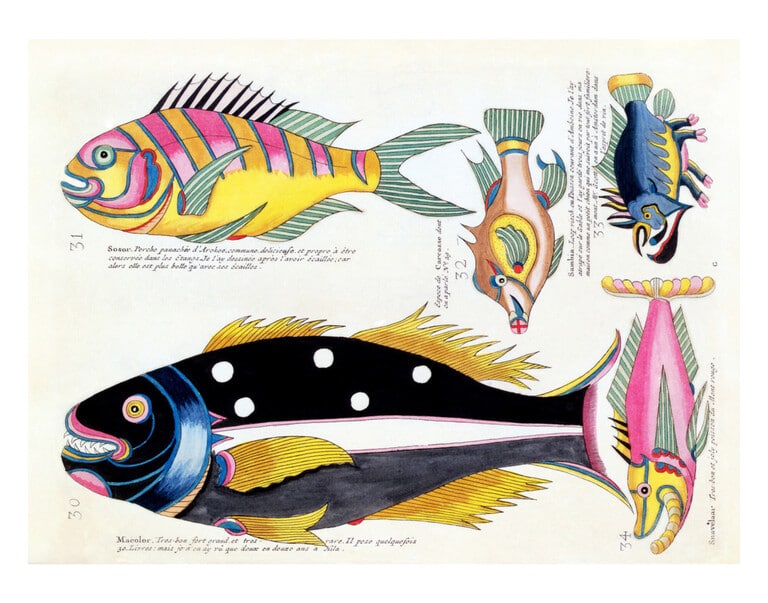
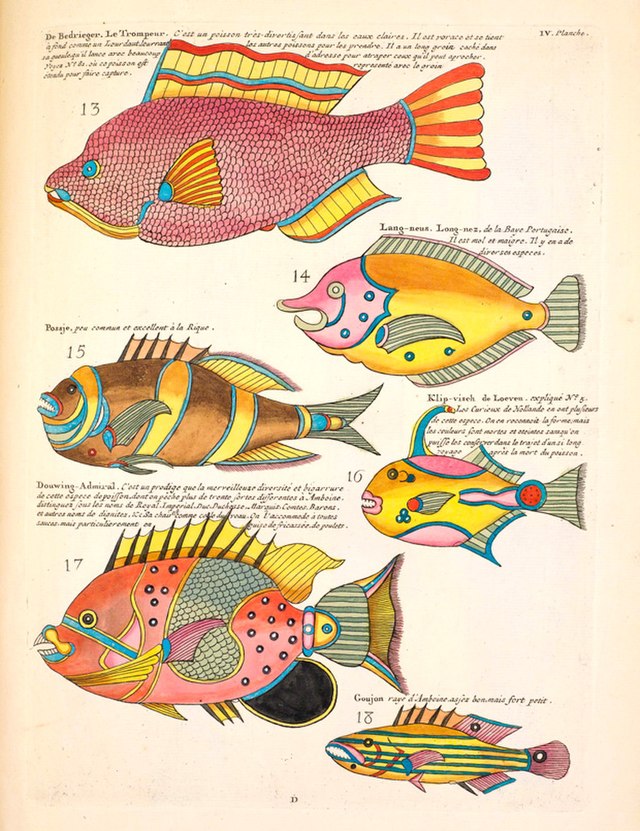
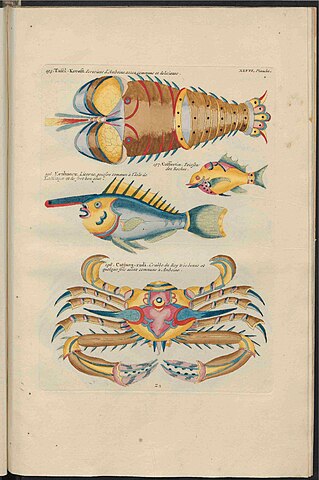
Both of these media files are in the public domain in the United States. This applies to U.S. works where the copyright has expired, often because its first publication occurred prior to January 1, 1929, and if not then due to lack of notice or renewal. See this page for further explanation.


Entitled: From “Fishes, crayfishes, and crabs, of diverse coloration and extraordinary form, which are to be found about the Islands of the Moluccas and on the coasts of the Southern Lands,” Amsterdam 1754
These images are in the public domain under CC BY-NC-SA 4.0 Deed | Attribution-NonCommercial-ShareAlike 4.0 International | Creative Commons
Resources of Interest


STEAM Activity – Be a Biology Illustrator
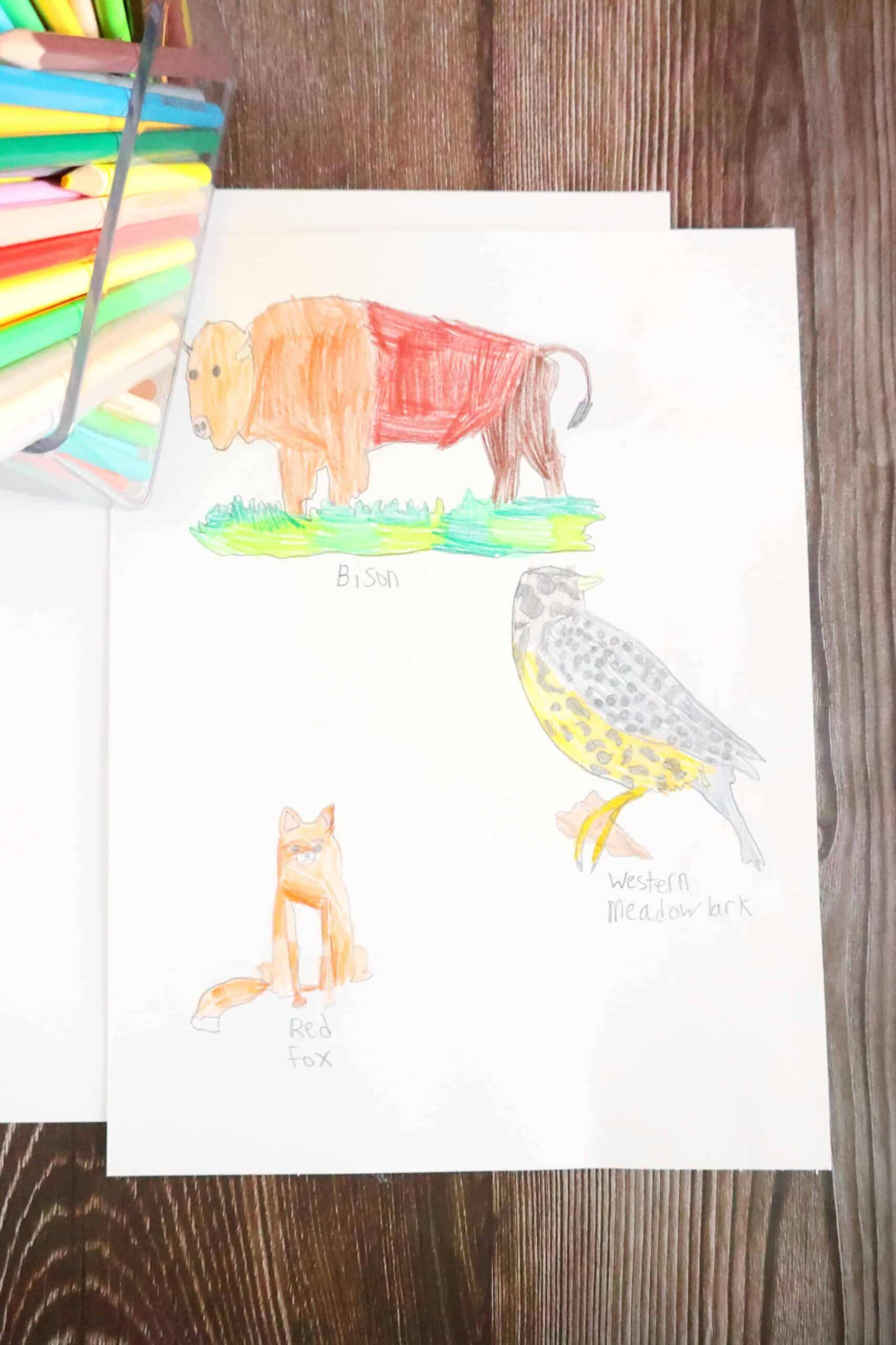
In this STEAM activity, you will play the role of a biology illustrator. You will just need some paper, colored pencils, animal photos or live animals you see in a book, at the zoo, or in your back yard, and some photos of Louis Renard’s art. (It is included in the free printable pack. Request this resource below.) Or, you can opt to go on a nature walk and draw some animals you see.
Select the animals you want to illustrate. What are some of your favorite animals. Although, Samuel Fallours drew mostly fish, crayfish, lobsters, and plants, you may decide to draw animals you’ve seen where you live, on a hike, at the zoo, or while visiting a national park. Study the details of these animals.
Then, draw a realistic picture. Next, draw the same animal but do so in the style of Louis Renard. What creative details can you add?
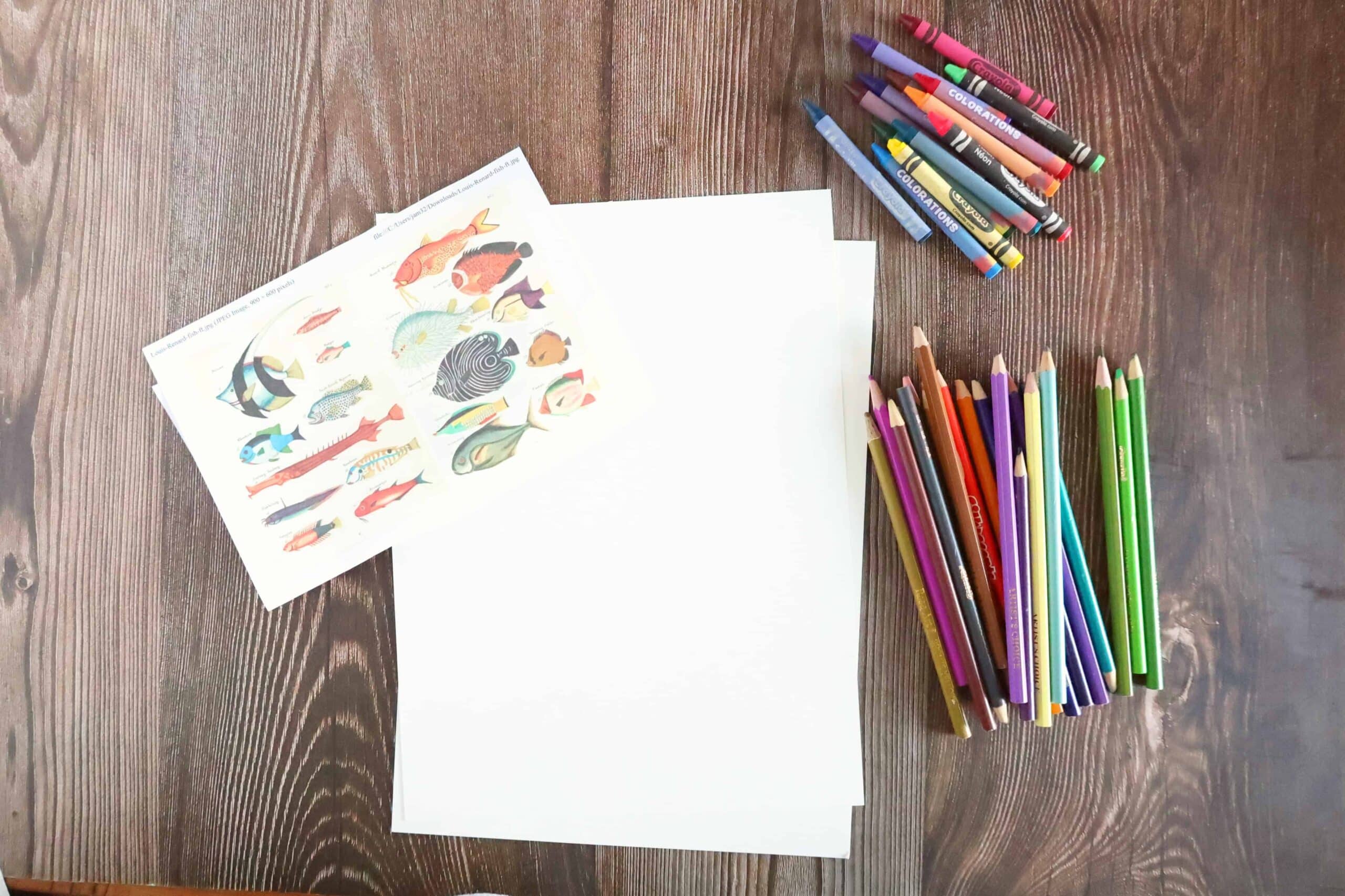
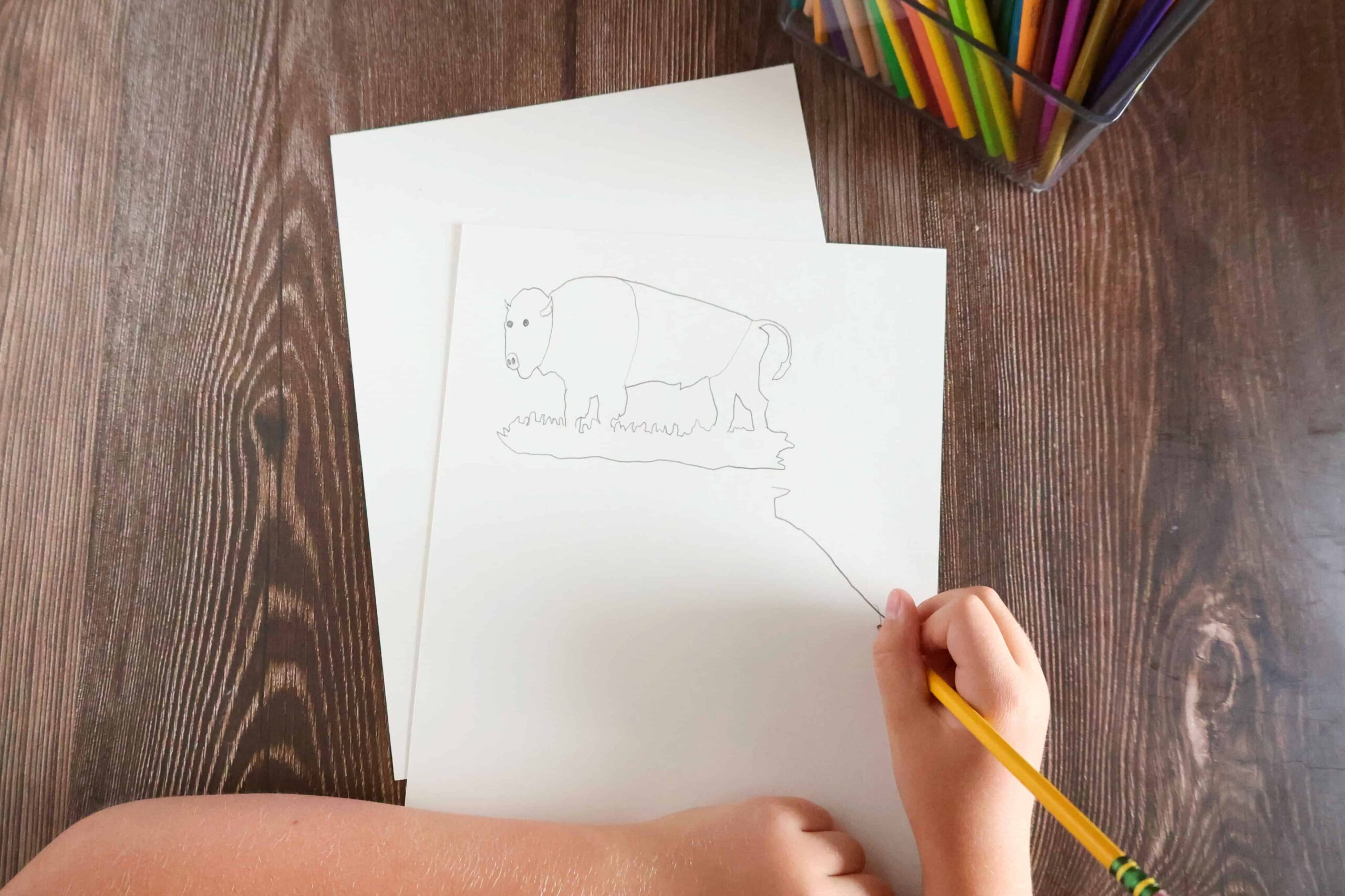
How accurate are your drawings? Did you add any human-like details or features to your drawings?
One resource we consulted state that 9% of Louis Renard’s drawings were totally embellished and weren’t true to real life.
Other STEAM Activities

I hold a master’s degree in child development and early education and am working on a post-baccalaureate in biology. I spent 15 years working for a biotechnology company developing IT systems in DNA testing laboratories across the US. I taught K4 in a private school, homeschooled my children, and have taught on the mission field in southern Asia. For 4 years, I served on our state’s FIRST Lego League tournament Board and served as the Judging Director. I own thehomeschoolscientist and also write a regular science column for Homeschooling Today Magazine. You’ll also find my writings on the CTCMath blog. Through this site, I have authored over 50 math and science resources.