


X-Ray Activities for Kids

In one of our X-ray activities for kids, we’ll build a simple box viewer for looking at X-ray images. If you’ve ever had an X-ray taken, you may have seen a picture of your bones on a computer screen. Making that picture requires X-rays, but viewing the X-ray requires visible light. Our viewer lets us explore the difference.
When you request our free printable lesson, there will be a second X-ray activity. Use the sign-up box at the bottom of this post to request the free lesson with worksheets and instructions for building the X-ray “viewer”.
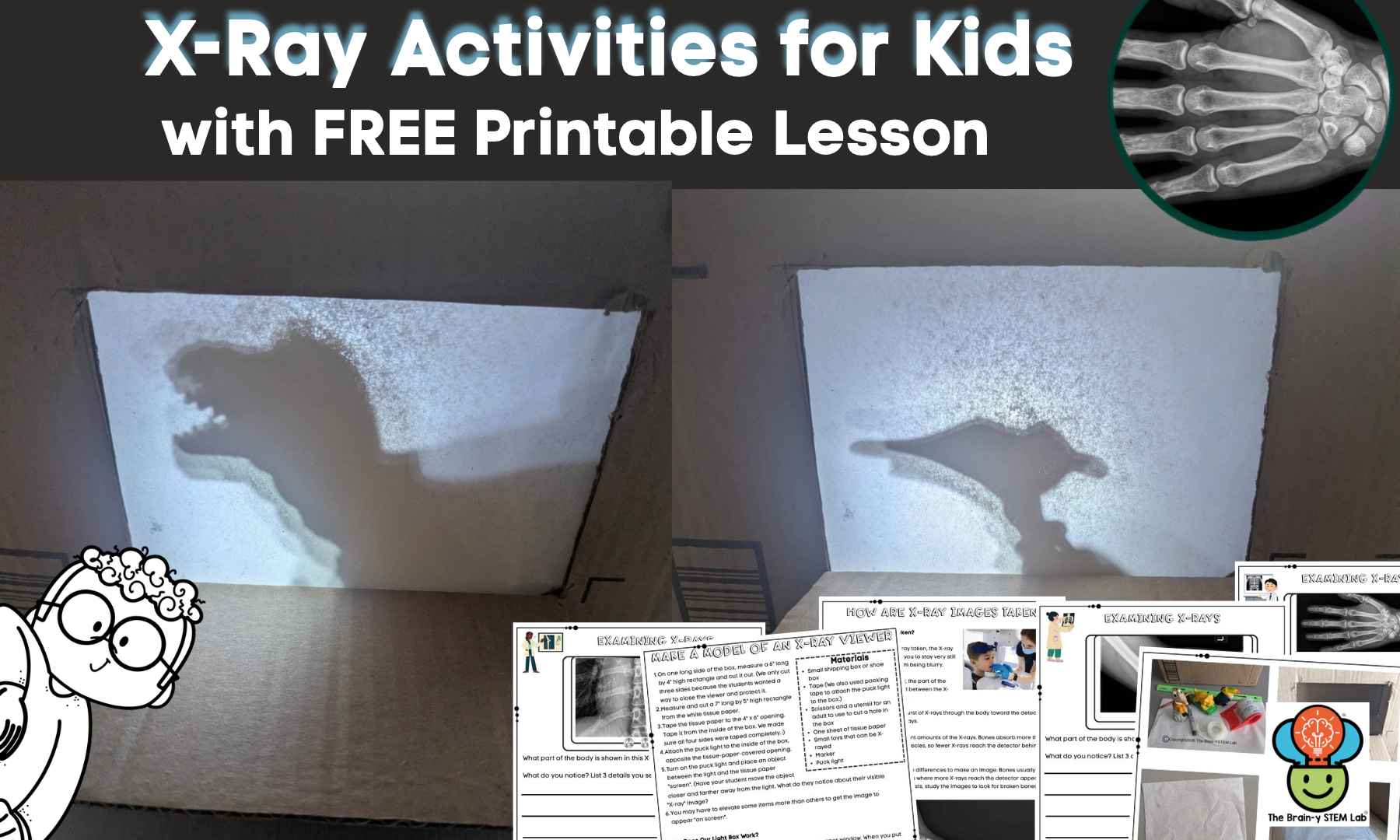
Directions for Building a Model of an X-ray Viewer
Here are the materials you’ll need to complete this X-Ray activity with your kids.
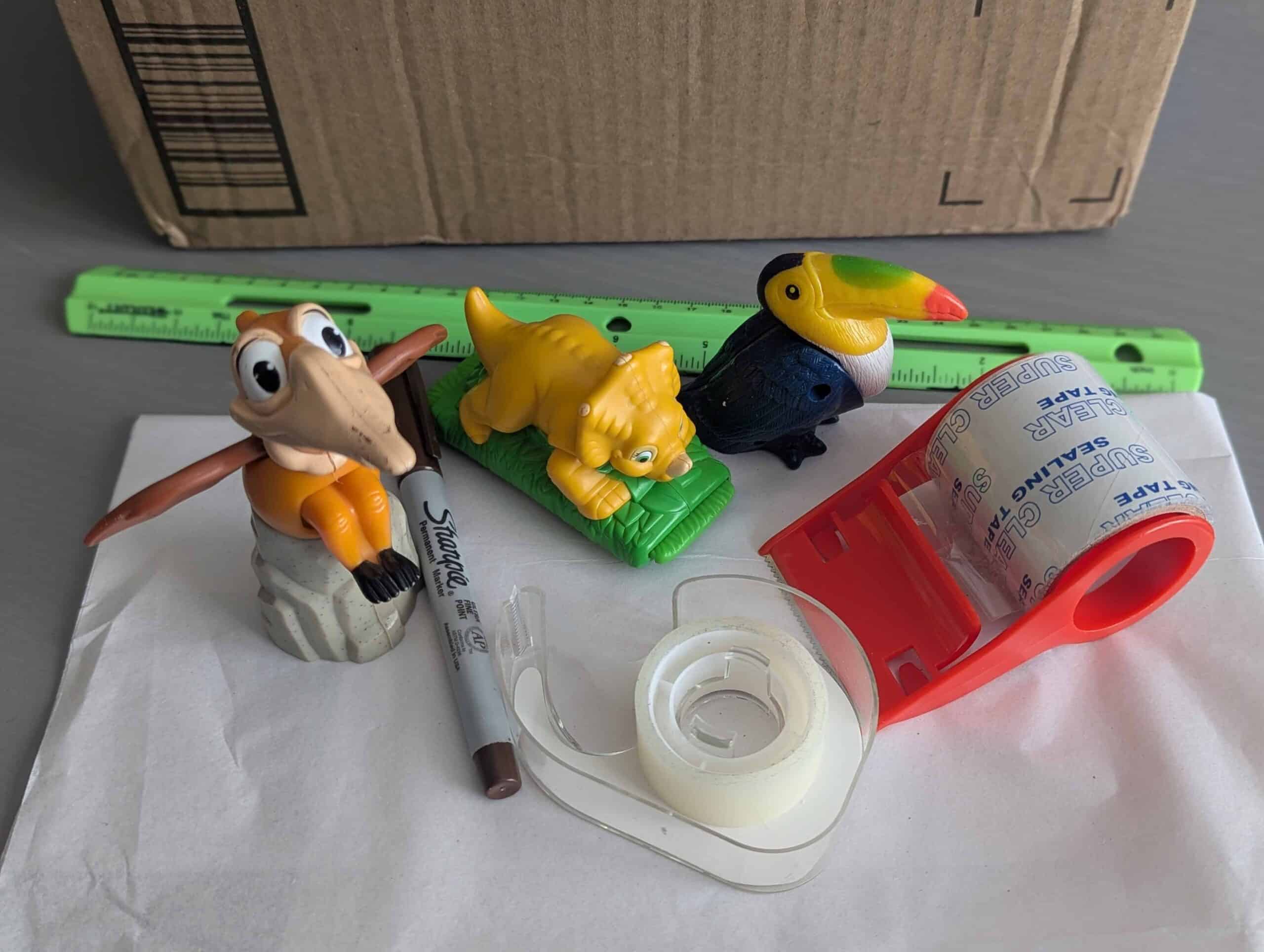
- Small shipping box or shoe box
- Tape (We also used packing tape to attach the puck light to the box.)
- Scissors and a utensil for an adult to use to cut a hole in the box
- One sheet of tissue paper
- Small toys that can be x-rayed
- Marker
- Puck light (We found one at Dollar General that came with a battery. You will find them with the flashlights.)
- On one long side of the box, measure a 6″ long by 4″ high rectangle and cut it out. (We only cut three sides because the students wanted a way to close the viewer and protect it. 🙂 )
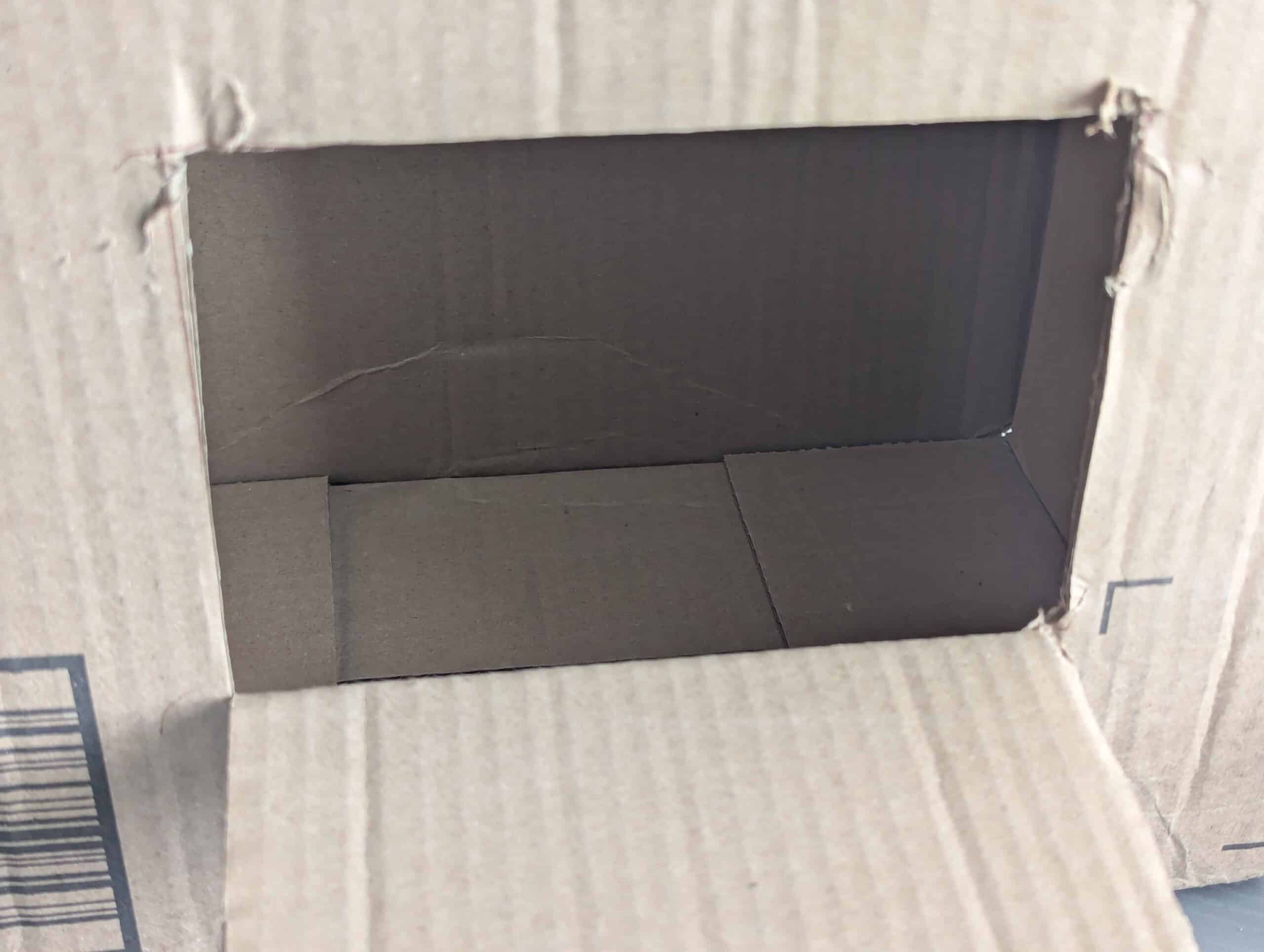
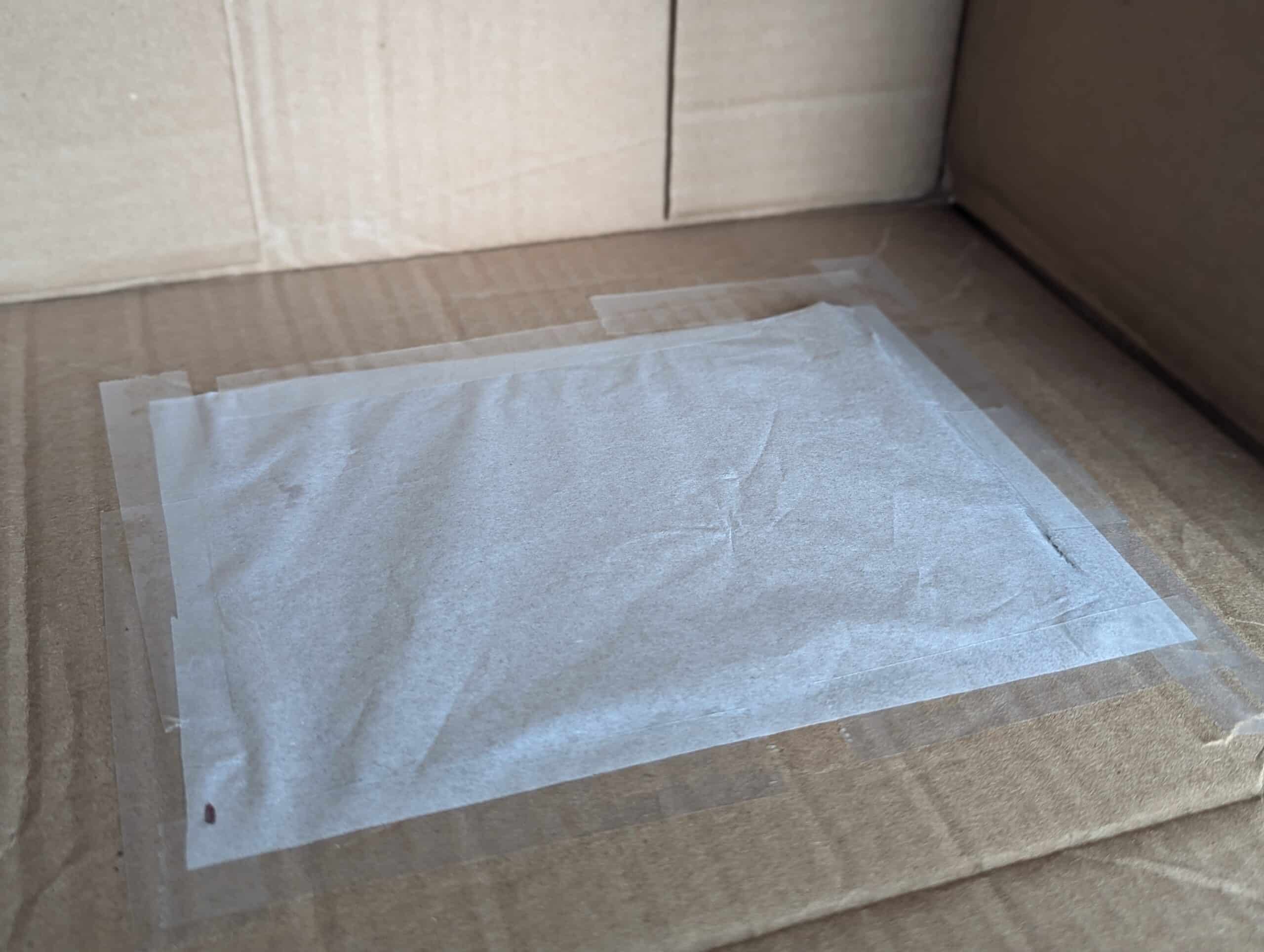
- Measure and cut a 7″ long by 5″ high rectangle from the white tissure paper.

- Tape the tissue paper to the 4″ x 6″ opening. Tape it from the inside of the box. We made sure all four sides were taped completely. 🙂
- Attach the puck light to the inside of the box opposite the tissue paper-covered opening.
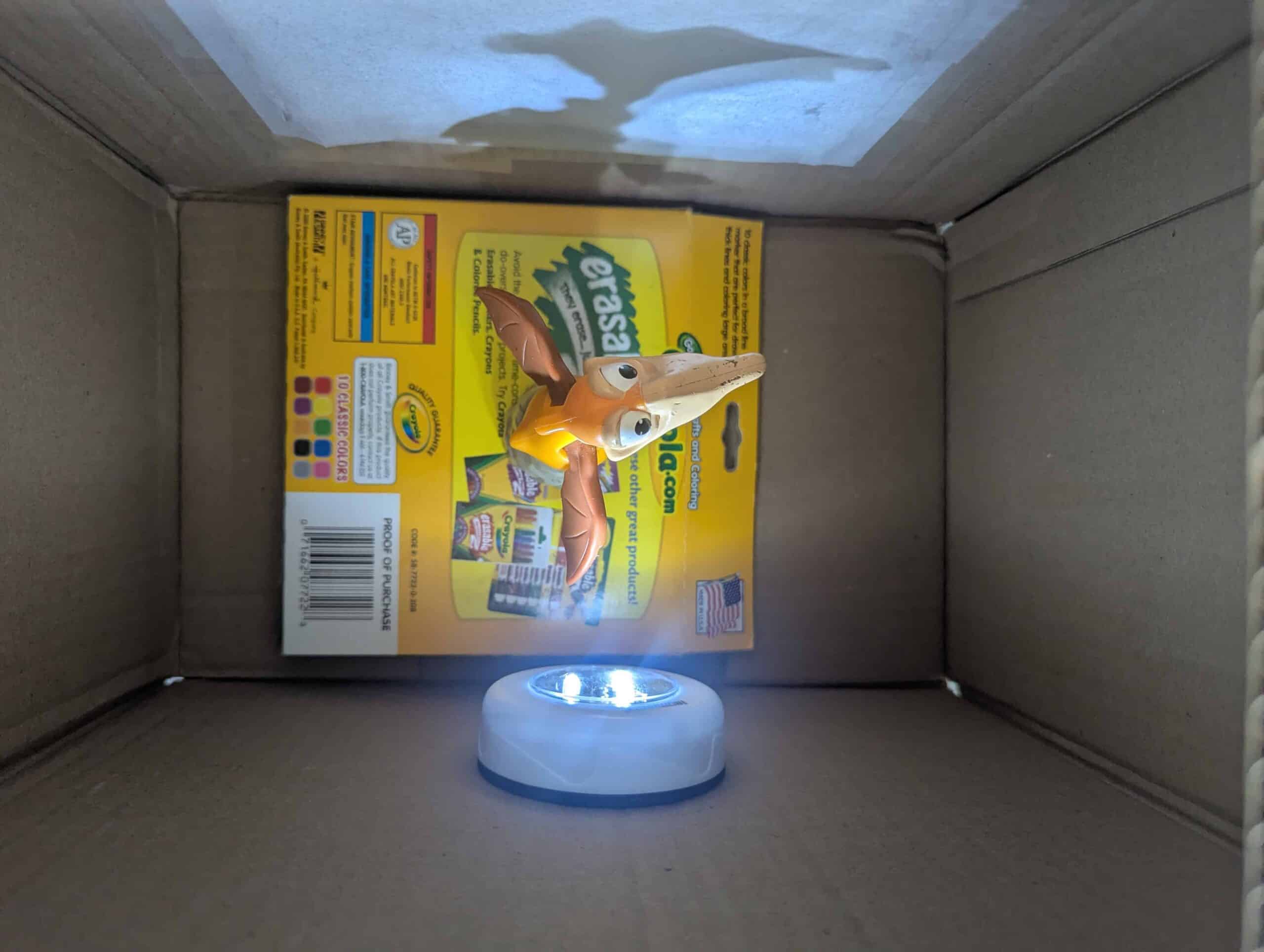
- Turn on the puck light and place an object between the light and the tissue paper “screen”. (Have your student move the object closer and farther away from the light. What do they notice about their visible “X-ray” image?
- We did have to elevate some items more than others to get the image to appear “on screen”. We grabbed a thin box of markers to put on the bottom of our viewer to raise the item being X-rayed.
A Fun Twist We Discovered
As we were testing our viewer, one of the kids discovered that they didn’t need the puck light. Their viewer was placed in front of a sunny window where the angle of the sun came in through the top of the box and hit the tissue paper window from the inside so that their dinosaur’s “X-ray” could be viewed without the use of the puck light.
This proved to be an interesting twist because the kids could see how the shadows (“X-ray”) shifted as the Sun appeared to move across the sky. That apparent movement happens because the Earth rotates. We had to keep adjusting our box to let sunlight in through the tissue paper, and we only saw the toy’s shadow, not the flap of the box or parts of the windowpanes.
The Science Behind the X-Ray Activity for Kids
Have you ever listened to the radio or had an X-ray taken of a leg, arm, or hand? These are examples of electromagnetic radiation at work.
Sunlight, radio waves, and X-rays are all forms of electromagnetic radiation, energy that travels in waves. Our eyes can detect some of this radiation as visible light. Other forms, including radio waves and X-rays, are invisible to us.
The word electromagnetic refers to electricity and magnetism. Electromagnetic waves have electric and magnetic parts that change together as they move.
Electromagnetic waves can travel through empty space. Sunlight, for example, travels through space from the Sun to Earth. These waves carry energy, and people use different kinds of them in everyday life.
Wavelength and Frequency
A wave has a wavelength: the distance from one wave peak to the next. A frequency tells how many wave peaks pass a point in a certain amount of time.
Imagine ocean waves rolling past you. Waves with long distances between peaks have longer wavelengths. If many peaks pass you quickly, the waves have a higher frequency.
Across the electromagnetic spectrum, radio waves have the longest wavelengths and lowest frequencies. Gamma rays have the shortest wavelengths and highest frequencies. Higher-frequency waves also carry more energy.
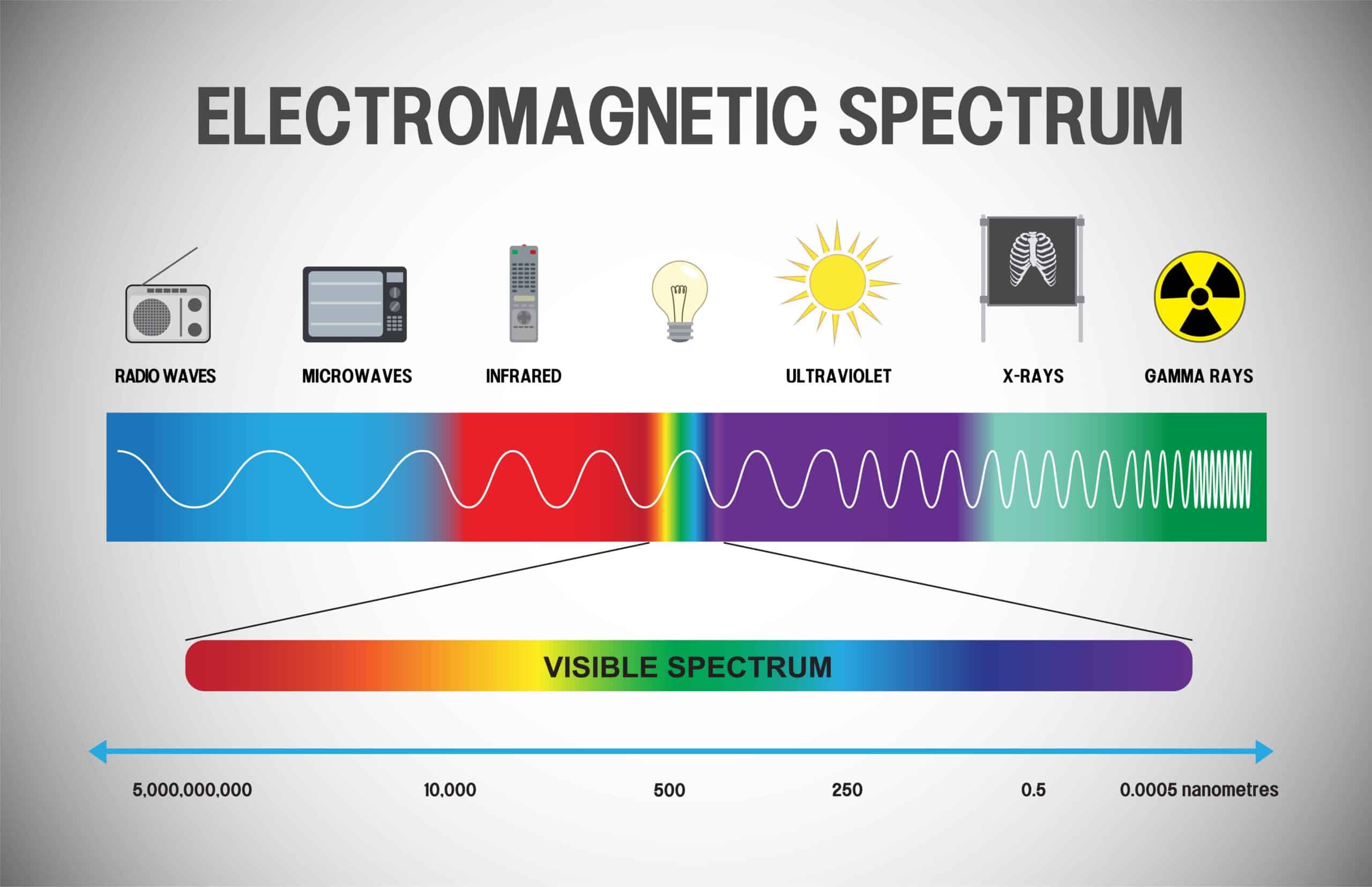
The electromagnetic spectrum is the full range of electromagnetic radiation. It includes:
- Radio waves
- Microwaves
- Infrared
- Visible light
- Ultraviolet
- X-rays
- Gamma rays
Our eyes cannot detect X-rays, but special detectors can. To make a medical X-ray image, a machine sends X-rays through part of the body toward a detector. Different tissues absorb different amounts of the X-rays.
Bones absorb more X-rays than the surrounding soft tissues, such as muscles. Fewer X-rays reach the detector behind the bones. The detector records these differences to create an image in which bones usually appear white or light gray.
Doctors examine these images to look for broken bones and other problems.
You may also want to check out our human skeleton printables. If your child or someone you know has an upcoming X-ray appointment, or maybe your child is going to the dentist soon and will have X-rays taken, here are a few links of interest:
- Nemours Kidshealth information on X-rays
- YouTube video of a child walking us through their dental X-ray appointment at the Royal Children’s Hospital in Melbourne, Australia.
- A video tour of the radiology X-ray room at Cincinnati Children’s Hospital.
How Do Doctors View X-ray Images?
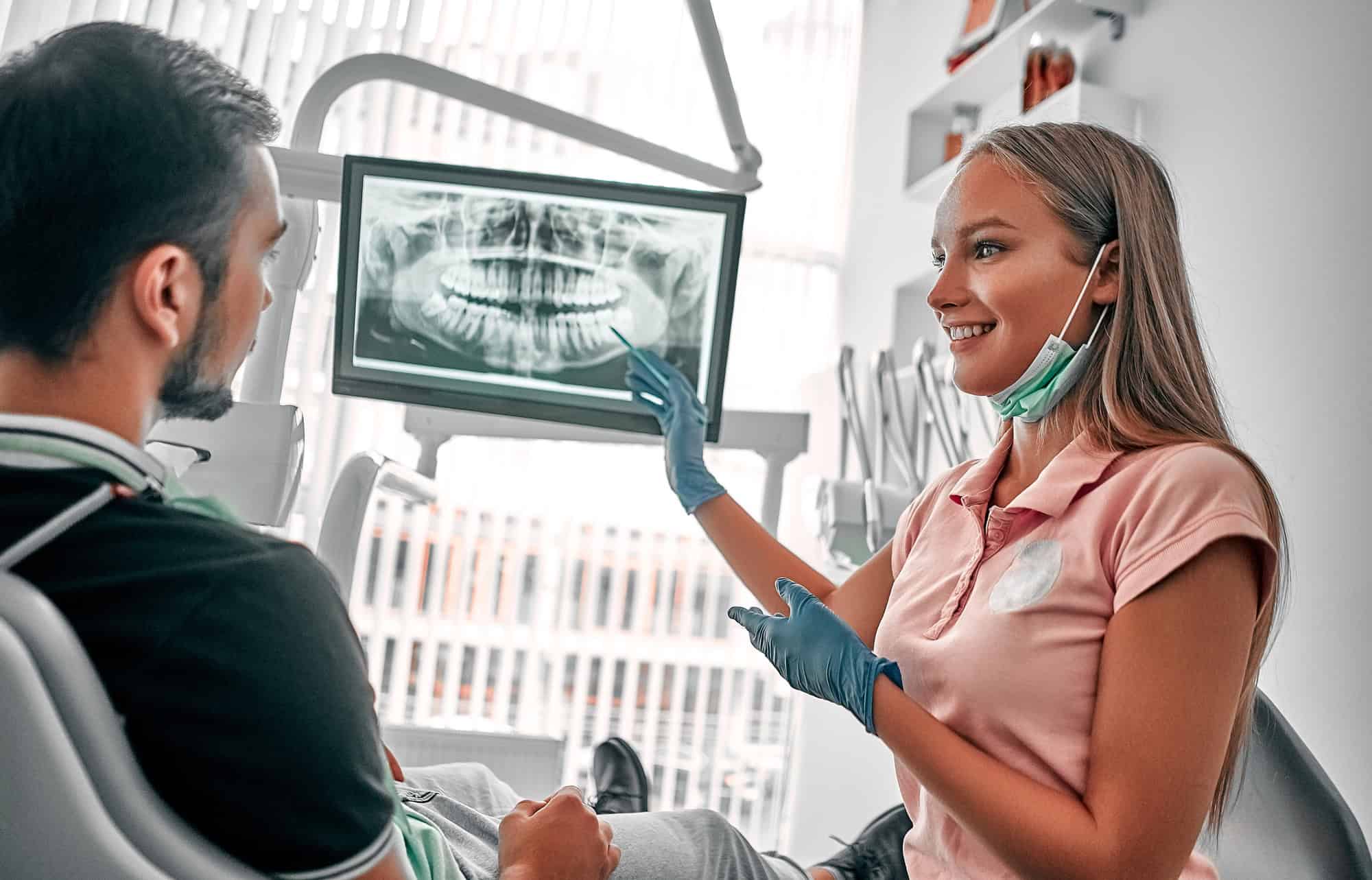
Making an X-ray image and looking at it are two different steps. Doctors often view digital X-ray images on computer screens. Images recorded on X-ray film can be placed against a lighted viewing panel. The panel shines visible light through the film so the image is easier to see.
X-rays help make the image. Visible light allows our eyes to see the image.
How Does Our Box Viewer Compare?
Our box uses visible light from a puck light or sunlight. When we place a dinosaur toy between the light source and the tissue paper, the toy blocks some of the light. Its shadow appears on the tissue paper.
We can call this a pretend dinosaur “X-ray,” but it shows the toy’s outline, not its bones or other structures inside. Our box makes shadows with visible light. A medical X-ray machine uses X-rays and a detector to make images of structures inside the body.
Download the X-Ray Activities for Kids Free Printable

I hold a master’s degree in child development and early education and am working on a post-baccalaureate in biology. I spent 15 years working for a biotechnology company developing IT systems in DNA testing laboratories across the US. I taught K4 in a private school, homeschooled my children, and have taught on the mission field in southern Asia. For 4 years, I served on our state’s FIRST Lego League tournament Board and served as the Judging Director. I own thehomeschoolscientist and also write a regular science column for Homeschooling Today Magazine. You’ll also find my writings on the CTCMath blog. Through this site, I have authored over 50 math and science resources.