


Convection Current Experiment
Convection is one of three main types of heat transfer. The other two are radiation, which is heat transfer through electromagnetic waves like sunlight, and conduction, which is heat transfer by direct contact. When you place a cooking pot on a heated stove burner, the burner transfers heat to the pot through direct contact.
Convection is the transfer of heat through the movement of heated particles into an area of cooler particles. Specifically, convection currents are movements in fluids (liquids or gases) caused by differences in temperature and density. When a fluid is heated, it becomes less dense and rises. As it moves away from the heat source, it cools, becomes denser, and sinks. This cycle creates a current – a continuous loop of rising warm fluid and sinking cool fluid.
You can experience convection when you light a match. The air directly above the lit match is always hotter than the air around the match.
This difference in temperature around the match is caused by the effect of heat on the density of air. Hot air is less dense than cool air and will rise leaving the cooler air below. As the warm air rises, a pattern of air movement is formed called a convection current. We can see these convection currents in the air and in water.
The convection current experiment listed below in and in our free printable helps make those currents visible to us.
How Convection Currents Work
The heat source warms the fluid or gas at the bottom.
The heated fluid or gas expands, becomes less dense, and rises.
As it moves upward, it cools.
The cooler, denser fluid or gas sinks back down.
This cycle repeats, creating a convection current.
Related post – Weather Study Resources

Convection currents in the atmosphere affect our weather. The rising of warm air and falling of dense cool air causes our winds. When warm, moist air rises and mixes with cold air, the atmosphere becomes unstable. This causes thunderstorms.
The Gulf Stream off the eastern coast of the States is a convection current. It carries warm water from the tropics up the east coast north toward the cold arctic waters. Warm water from the equator moves toward the poles while cooler, saltier water sinks and moves back toward the equator deep in the ocean. These convection currents drive ocean circulation, also called thermohaline circulation or the “global conveyor belt.”
An example of Convection, Radiation, and Conduction
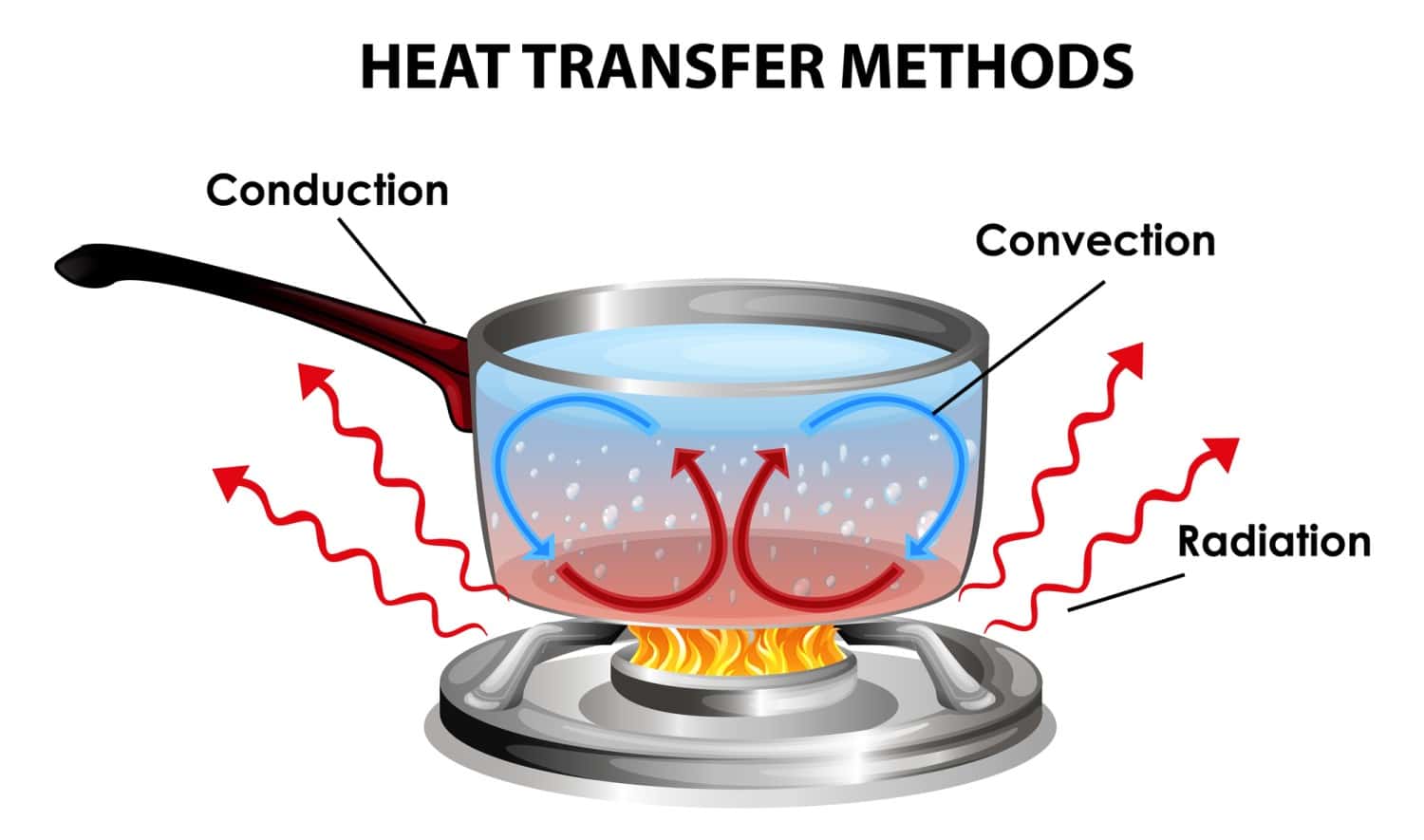
Above, we used the example of placing a cooking pot on a hot burner as an example of conduction. However, if we look at the process of boiling a liquid in a pot on the stove, we’ll see an example of all three types of heat transfer.
In the diagram below. we can see how conduction happens first when the metal pot sits on the hot burner. The heat moves from the burner to the pot by direct contact.
Metal is a good conductor, so the heat quickly moves through the bottom of the pot.
Then, the heat transfers from the hot bottom of the pot to the water that’s touching it.
The burner heats the pot, and the pot heats the water at the very bottom.
Once the water at the bottom of the pot heats up from conduction, convection currents begin:
- The hot water becomes less dense and rises to the top of the pot.
- Cooler, denser water from above sinks to the bottom, where it is then heated.
- This creates a circulating current that spreads heat throughout the pot.
You can often see this happening—bubbles rising and swirling as the water starts to boil.
Even before you touch the pot or the burner, you can feel the heat from a distance. That’s thermal radiation.
- The burner (especially if it’s glowing red-hot) gives off infrared radiation.
- This heat travels in waves through the air and can be felt without touching anything.
- Some radiation also escapes from the pot and heats the air around it.
If you hold your hand above the pot or near the burner (carefully!), you can feel the warmth—that’s radiation at work.
Try Both Convection Current Experiments
Convection Current Experiment 1 – Spiraling Snake
Request our free printable and get the lesson on the three types of heat transfer, an explanation of convection currents, the activity instructions, the snake template, and more.
Our sponsor for the convection current activity is Skill-Trek.com. They are a family-friendly program that ensures your kids won’t have any major gaps in essential life skills. SkillTrek’s huge library is filled with bite-sized lessons that cover topics like car maintenance, managing a household budget,basic home maintenance, first aid and safety, housekeeping, hygiene, and much more. Their videos are for ages 8 and up.

Here is a short video of the Spiraling Paper Snake experiment
Convection Current Experiment 2 – Currents in Water
Heat affects the density of water as well. You can create your own convection current with water that will allow you to see the currents caused by the density difference of water at different temperatures.
Supplies:
- ice cube tray
- water
- food coloring
- clear drinking glass or jar
Procedure:
- Mix water and food coloring and pour the colored water into an ice cube tray. This experiment works best if the water is a very dark color.

- Put the ice cube tray in the freezer until frozen solid.
- Fill a clear glass with warm water.
- Add one ice cube to the glass of water.
- Observe what happens.

What’s Happening?
The warm water will melt the ice cube, but the resulting water will be very cold. This cold, dense water will sink to the bottom of the glass. You can see this happening because the melted water from the ice cube will be whatever color you made your ice cube.

As the water warms, it will rise back to the top of the glass. The colored water will allow you to see the convection current in the glass.
Try this simple experiment at home!
