


Effects Of Salt on the Freezing Point of Water


Effects Of Salt on the Freezing Point of Water
What happens when we add salt to water? Salt lowers the freezing point of water, which means saltwater must get colder than fresh water before it freezes. We can demonstrate this with a simple experiment.
Around here, you can tell when there is the threat of winter precipitation. The salt trucks are out in force. They spread salt on overpasses and intersections before anything even starts falling from the skies. We take it for granted that the salt will prevent the roads and sidewalks from becoming too slick to drive or walk safely. Have you ever really thought of the science behind using salt on roads?
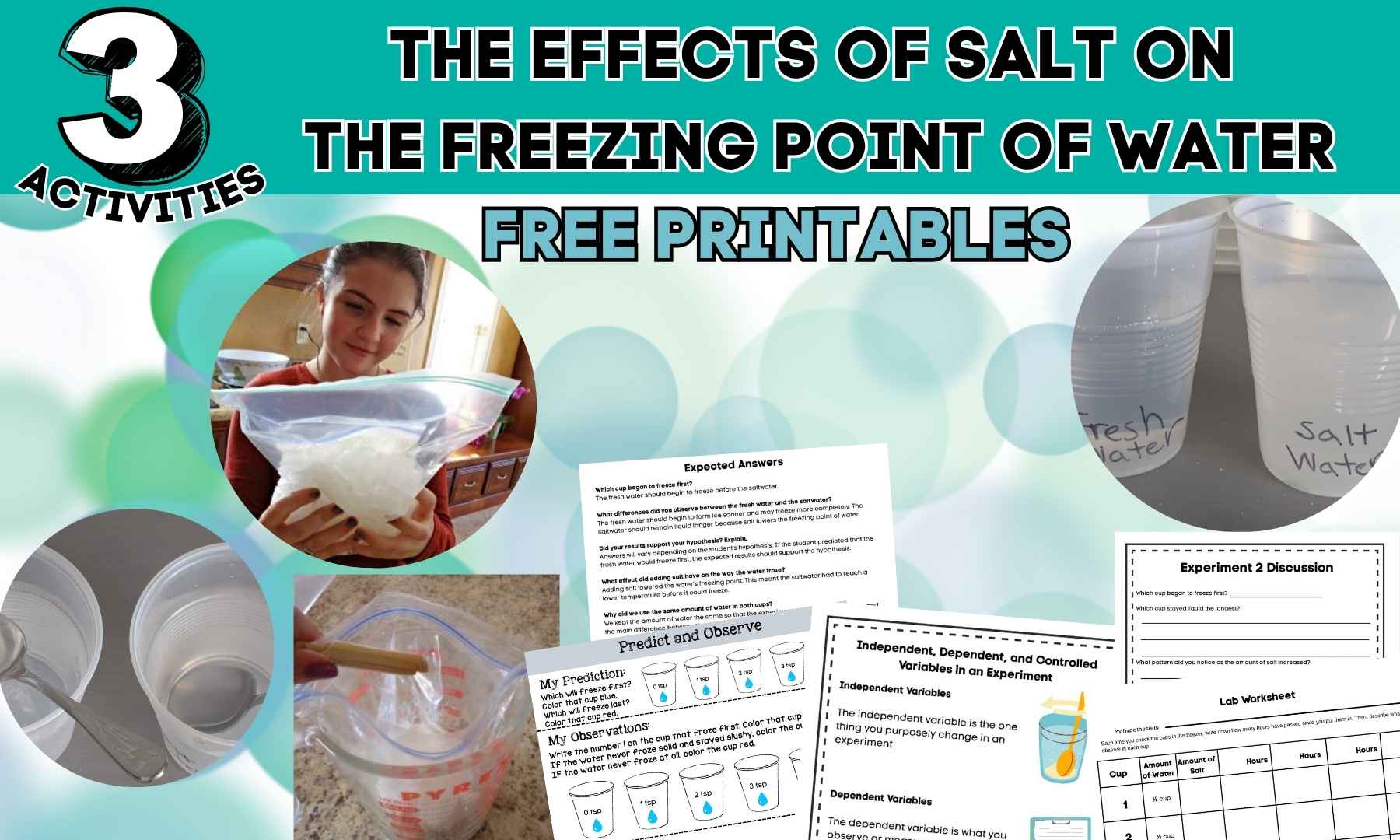
Why Does Salt Lower the Freezing Point of Water?
Water normally freezes at 32°F (0°C). When salt dissolves in water, it separates into sodium and chloride ions. These dissolved particles interfere with water molecules forming the organized crystal structure of ice. As a result, the water has to get colder before it freezes.
This is called freezing point depression.
As the concentration of dissolved salt increases, the freezing point decreases, although there is a limit of how much ordinary salt can lower the freezing point.
Why Do We Put Salt on Icy Roads?
One way road crews help prevent slick and icy roads is by applying salt or a salt solution before the freezing precipitation arrives. As the salt dissolves in water, it creates a solution called brine that has a lower freezing point than pure water. Under the right temperature conditions, this can help prevent ice from forming on the road.
Salt can also help melt ice that has already formed. When salt dissolves in liquid water at the ice’s surface, it forms brine. Because the brine has a lower freezing point than pure water, more ice can melt to form liquid water when the temperature is within the effective range of the salt.
As temperatures drop, it becomes less effective at melting ice. In very cold conditions, road crews may use other materials that work better at lower temperatures.
Salt and Freezing Point of Water Experiment
Now, let’s investigate the effect of salt on freezing for ourselves. In the first experiment, you’ll compare fresh water and saltwater in the freezer. Then, you’ll use the same science to make ice cream!
Experiment 1: Does Saltwater Freeze Differently Than Fresh Water?
Question: How does adding salt affect the way water freezes?
Before beginning the experiment, write a hypothesis. For example, an older student might write “If salt is added to water, the saltwater will freeze more slowly than the fresh water.”
A younger student might write, “I think the saltwater will freeze first.”
Materials:
- 2 identical plastic cups (Plastic is preferred
- 1 cup of water for each cup
- 2 tablespoons of table salt
- spoon
- labels or markers
- freezer
- Pour 1 cup of water into each plastic cup.
- Label one cup FRESH WATER and label the other SALTWATER
- Add 2 tablespoons of salt to the saltwater cup and stir until well mixed.
- Place both cups next to each other in the freezer.
- Check the cups after 1 hour and record what you observe.
- Continue checking them at regular intervals.
- Compare the two cups.
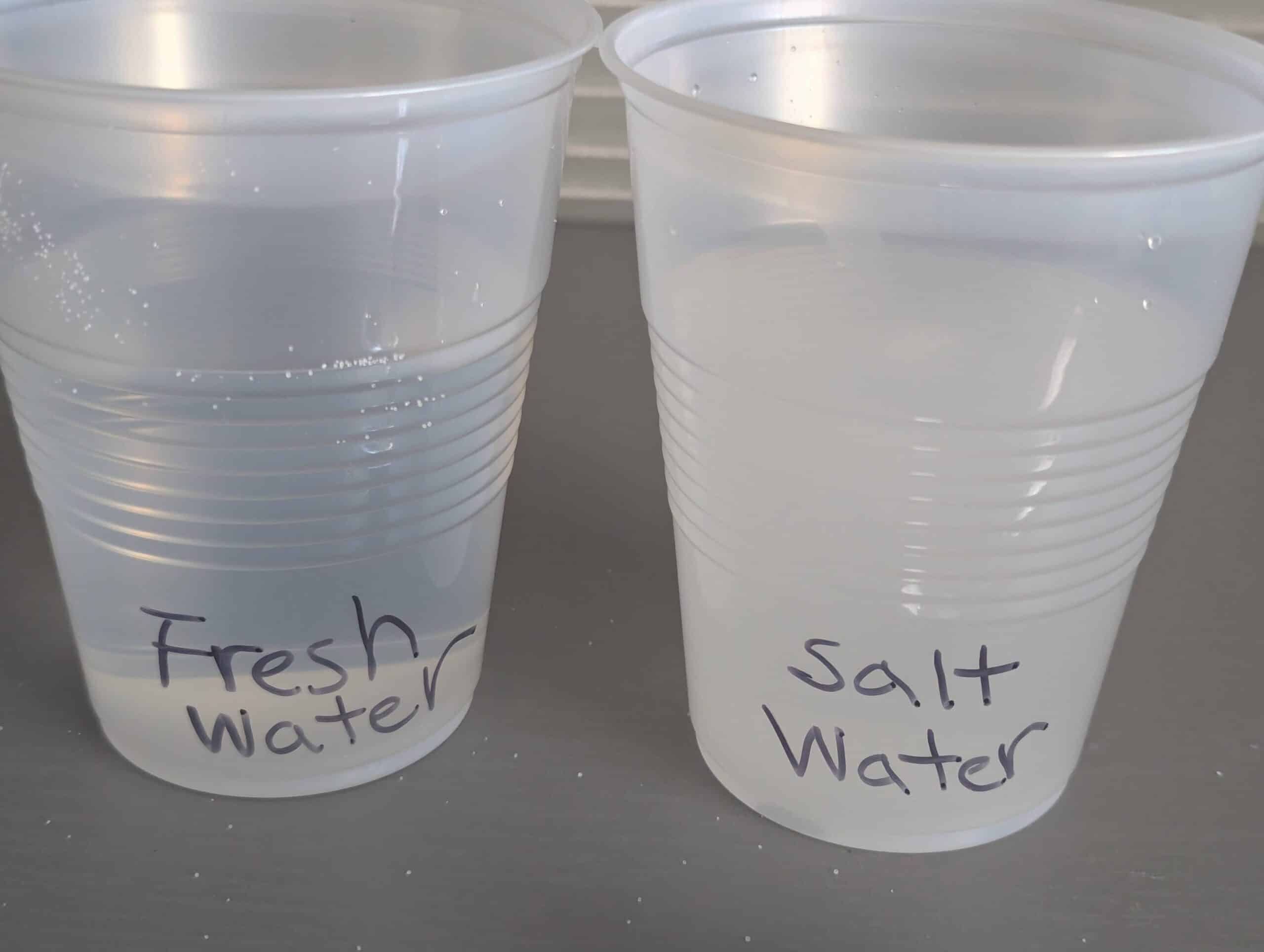
Which cup began freezing first? What are the differences between the two cups?
What Are the Variables in Our Experiment?
Scientists use variables to help them design an experiment. A variable is something in an experiment that can change, be measured, or be kept the same.
Independent Variable
The independent variable is the one thing you purposely change in an experiment. In our experiment here, the independent variable is whether or not salt is added to the water.
Dependent Variable
The dependent variable is what you observe or measure to see if the independent variable had an effect. In our experiment, the dependent variable is how the water freezes over time. You will observe which cup begins freezing first and how much of the water has frozen each time you check it.
Controlled Variable
Controlled variables are the things you keep the same. In this experiment, the controlled variables include the amount and starting temperature of the water, the size and material of the cups, the location of the cups in the freezer, and the times at which you check them.
Keeping these variables the same helps us determine whether adding salt was responsible for the differences we observed.
Download the Experiment Worksheets
Use the form below to receive the worksheets for these two experiments. You’ll be added to our enewsletter community.
Experiment 2: Ice Cream in a Bag
Have you ever made homemade ice cream? Did you add rock salt to the ice? Do you know why? In order to freeze the cream, the temperature needs to be less than 32 degrees F.
Salt lowers the freezing point of the water around the ice. This allows the ice-and-salt mixture to become colder than 32°F (0°C), helping remove heat from the ice cream mixture so it can freeze.
Try making ice cream in a baggie and test the capability of the salt to lower the temperature of the ice. It’s yummy science!
Ingredients:
- ½ cup Half-and-Half cream
- 1 tablespoon sugar
- ¼ tsp vanilla
- ⅓ cup rock salt or table salt
- 3 cups ice, crushed
- 1 sandwich size zip-top bag
- 1 gallon zip-top bag
- thermometer

Add the cream, milk, sugar and vanilla to the smaller zip-top plastic bag and seal.
Add the 3 cups of ice to the gallon bag. Use the thermometer to measure the temperature of the ice in the bag. Record this temperature. You’ll measure it again after adding the salt so you can compare the temperatures.

Pour the salt into the bag of ice.

Put the quart bag of ingredients into the gallon bag of ice, then seal the gallon bag. Carefully, shake the bags, mixing and cooling the contents. You might want to hold a towel between the bags and your hands.
What do you predict will happen to the temperature now that the salt is added?

Shake the bags for 5 to 15 minutes, or until the cream becomes firm – ice cream.
After shaking the bags for several minutes, measure the temperature of the ice-and-salt mixture again. How does it compare with your first measurement?

Scoop your ice cream from the bag and enjoy!
Discussion Questions:
Compare the temperatures you recorded before and after adding the salt. What happened to the temperature? How did adding salt help the ice cream mixture freeze?
For older students: How does this experiment demonstrate freezing point depression?
What Did We Learn?
These experiments show that adding salt lowers the freezing point of water. From keeping winter roads safer to making homemade ice cream, freezing point depression is a great example of chemistry at work in everyday life.
Try changing the amount of salt in your experiment and see what happens. Does more salt always produce the result you expect?
Frequently Asked Questions
Does salt make water freeze faster?
No. Adding salt lowers the freezing point of water, which means the saltwater must get colder than fresh water before it can freeze.
What is freezing point depression?
Freezing point depression is the lowering of a liquid’s freezing point when another substance, such as salt, is dissolved in it. In our experiment, dissolving salt in water lowers the temperature at which the water freezes.
Why Does Salt Melt Ice?
Salt dissolves in liquid water at the surface of ice and forms a saltwater solution with a lower freezing point than pure water. Under the right conditions, this causes more ice to melt.
Take if Farther
Repeat the experiment using different amounts of salt. Keep the amount of water and all the other controlled variables the same. How does changing the amount of salt affect the results?

I hold a master’s degree in child development and early education and am working on a post-baccalaureate in biology. I spent 15 years working for a biotechnology company developing IT systems in DNA testing laboratories across the US. I taught K4 in a private school, homeschooled my children, and have taught on the mission field in southern Asia. For 4 years, I served on our state’s FIRST Lego League tournament Board and served as the Judging Director. I own thehomeschoolscientist and also write a regular science column for Homeschooling Today Magazine. You’ll also find my writings on the CTCMath blog. Through this site, I have authored over 50 math and science resources.