


Learning About Animal Habitats


Animal Habitats
My kids are huge animal lovers, so I knew that we would need to devote a little more time and resources to any study of animals.
For instance, in our study of animal habitats, my son sorted the animal cards that are a free download here. He had a pile of cards for grasslands, one for forests, one for desert and a last one for freshwater habitats. As he looked at how the animals were grouped together, he noticed that many of his favorite animals all lived in the same habitat and that prompted him to want to learn more about arctic and freshwater habitats.

Digging Deeper into a Habitat Study
Before digging any deeper into a habitat study, download our free animal habitat printable cards and assortment of animal report pages. They are absolutely free, and it’s an engaging and fun way for students to record and journal what they are learning as they research.
We knew we wanted to learn more about what animals lived in freshwater and arctic habitats, so we started looking for information in different places.
- Our home library. We gathered story books and non-fiction books on sharks, penguins, puffins, sea shells, ponds, sea shores, lobsters, ocean life and more. These are what we used to learn more about specific habitats and animals in our science time and gave us great reading material for our reading time.
- Public library. Need I say more?
- You Tube. We love YouTube for so many subjects.
- Habitat links
- National Geographic habitat resources
- Animal Habitats for younger children
- NeoK12.com – lots of forest habitats videos
- Habitats of the World lesson PDF from NurtureNatureCenter.org
- Habitat and Animal-Related Books and Games
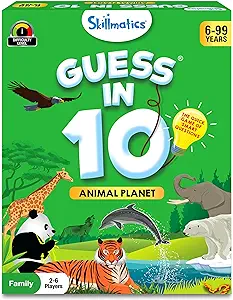

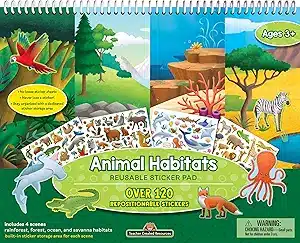

Request the Animal Habitat Cards & Animal Report Forms
Determine What Your Student Knows Without A Test
Gathering information is great, but students need to be able to show what they have learned. Testing is one way, but a boring for a second grade boy. We like hands-on activities to explore and learn, as well as show how much we have learned.
I asked my son if he would like to create a model habitat in some way. He could have drawn it, painted it, made a diorama, sculpted it out of clay or created it any number of ways. He chose to create a type of puppet show.

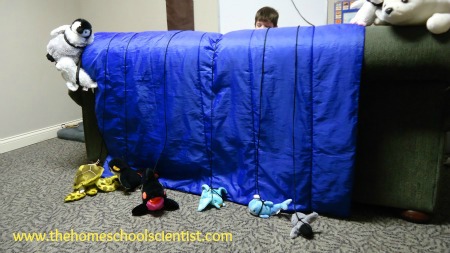

Complete with a flying puffin.
In this drama, my son told us about the water and ice habitat and how even though animals might live in water they might not live in the same type of water or area of the world. He explained which animals are predators and which are prey, which animals are carnivores and which are herbivores. He passed his test.
How do you incorporate hands-on learning into your homeschool?

I hold a master’s degree in child development and early education and am working on a post-baccalaureate in biology. I spent 15 years working for a biotechnology company developing IT systems in DNA testing laboratories across the US. I taught K4 in a private school, homeschooled my children, and have taught on the mission field in southern Asia. For 4 years, I served on our state’s FIRST Lego League tournament Board and served as the Judging Director. I own thehomeschoolscientist and also write a regular science column for Homeschooling Today Magazine. You’ll also find my writings on the CTCMath blog. Through this site, I have authored over 50 math and science resources.