


Dissolving Candy Canes Experiment and Worksheets


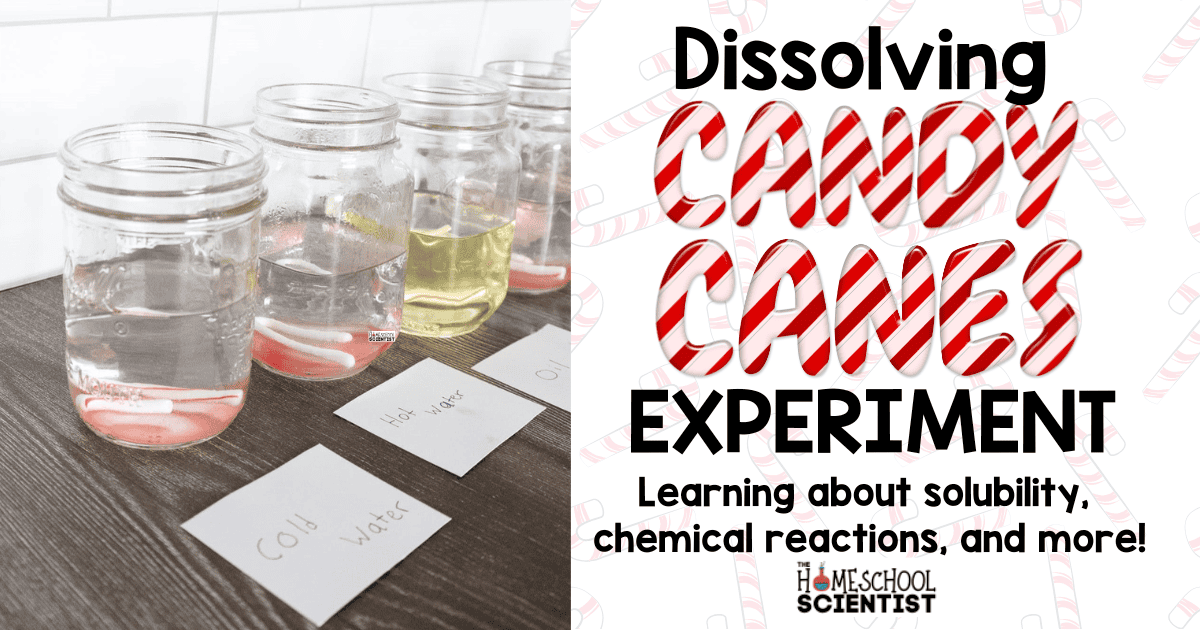
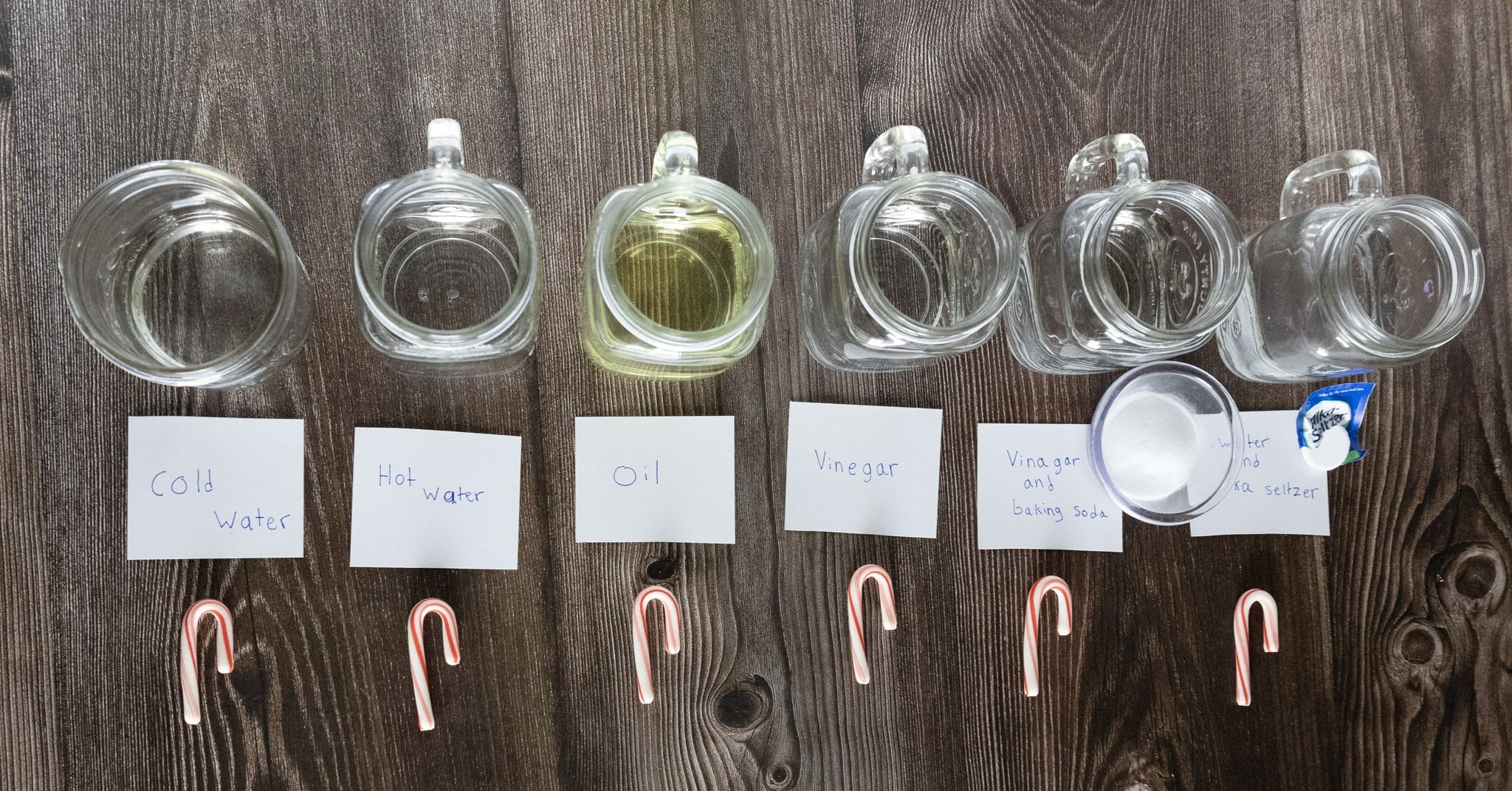
We love conducting experiments with candy, so it’s no surprise that we decided to try dissolving candy canes in various liquids. Our liquids of choice for dissolving candy canes were cold water, hot water, oil, vinegar, vinegar and baking soda, and water and Alka-Seltzer.
We did a similar experiment with candy pumpkins.
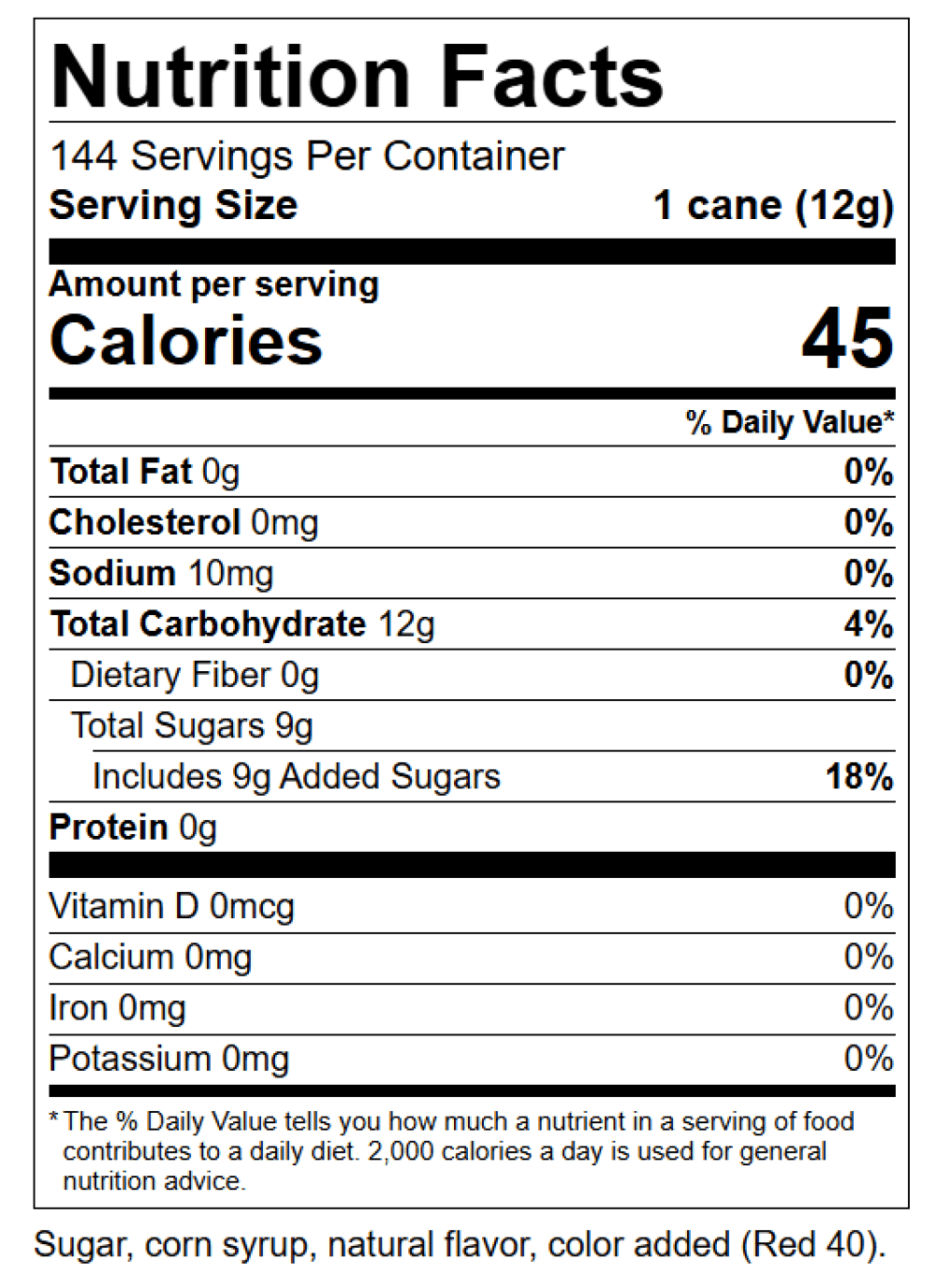
Candy experiments are also a good opportunity to teach our kids to read nutrition labels! So, before starting the chemistry part of this experiment, ask your kids to read the nutrition label on the candy canes. If they aren’t familiar with reading these labels, we have an activity for that! Note the ingredients on our candy cane box (mini candy canes) – Research the coloring red 40.
So, these little treats are filled with sugar and dye, but that’s all the more reason to dissolve the candy canes!
Introduce this experiment by watching a video about how candy canes are made. Here’s one from Insider. Redstone Foods has this history behind the origin of candy canes.
Vocabulary Related to Our Dissolving Candy Cane Experiment
Since we will be dissolving candy canes to test their solubility, we made a list of chemistry vocabulary list, which included molecules, solvents, solutes, solution, reactants. The free printable accompanying this activity incorporates all of the vocabulary listed in this post.
- When the vinegar and baking soda are mixed together it forms a solution. A solution is a mixture that has a solute and a solvent. The solute is what is being dissolved. The solvent is what the solute is dissolved into.
- When we set up this experiment, as the vinegar and baking soda are mixed together it forms a solution. A solution is a mixture that has a solute and a solvent. The solute is what is being dissolved – the baking soda. The solvent is what the solute is dissolved into – the vinegar.
- When we are dissolving candy canes in the baking soda and vinegar solution, the candy cane becomes a solute because we are dissolving the candy cane in the vinegar and baking soda solution.
- Solubility is the ability of a substance to dissolve in a liquid. Think about this activity, discuss with your student what they think will happen when the candy cane is dissolved in warm water, and what do they think will happen when the candy cane is dissolved in oil? In which liquid do they think the candy cane will dissolve faster and more completely? Does the candy cane have better solubility in the warm water versus the oil? We’ll find out!
Information About Chemical Reactions
A chemical reaction is when substances change into new substances. This happens when the molecules of the original substances rearrange and combine in different ways.
The substances you start with in a chemical reaction are called reactants. For example, if you mix baking soda and vinegar, each of them is a reactant.
After the reaction happens, you get something different called products. In the baking soda and vinegar example, the reaction produces carbon dioxide gas, water, and other substances.

Sometimes, you can see signs that a chemical reaction has taken place. These signs include:
- Bubbles: Gas is produced. When baking soda and vinegar are mixed, you see the carbon dioxide bubbles.
- Color Change: The mixture changes color.
- Temperature Change: The mixture gets warmer or cooler. Check out this activity that produces an endothermic chemical reaction.
- New Smell: A different smell appears.
In many cases, chemical reactions create products that cannot easily change back into the original reactants. For example, when you bake a cake, the ingredients change into a cake, and you can’t turn it back into flour, eggs, and sugar.
- Chemical reactions and chemical changes almost always involve energy changes. During these reactions and changes, bonds are being made and/or being broken; these processes involve energy.
- Since energy is involved in a chemical reaction, these reactions fall into one of two categories – an endothermic chemical reaction or an exothermic chemical reaction.
- Both of these words have Greek origins. Exo means out, Endo means within, and thermic is from the Greek word therme, which means heat.
- In an endothermic chemical reaction more energy is released into the surrounding area than is absorbed.
- In an exothermic chemical reaction, more energy is released into the surrounding area than is absorbed
Dissolving candy canes in water and Alka Seltzer is shown in the video below.
We have this information in the free printable you can use alongside this activity. Request it below.
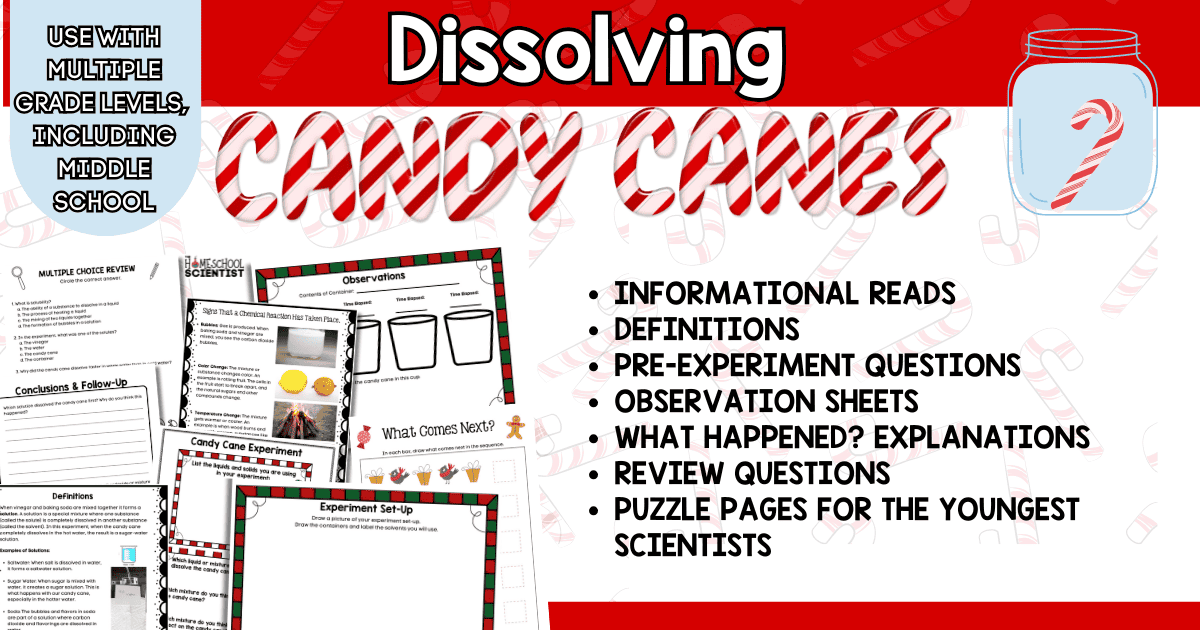
Request the Dissolving Candy Canes Free Printable Lesson
Dissolving Candy Canes Experiment – Experiment Set-Up & Pre-Experiment Discussion
We discussed what we hypothesized would happen:
- Which mixture would dissolve the candy cane first.
- Which candy cane would dissolve the slowest.
- Would there be a candy cane that dissolved (almost) completely?
- Do you think bubbles will form on any of the candy canes?
Use the worksheets in the printable pack to complete the questions.
Review the vocabulary pages for the words solute, solution, solvent, products, reactants, and chemical reaction
Smell each liquid. How does it smell? (At this point, do not add the baking soda or Alka Seltzer.)
Materials Needed:
Here is the list of items needed for this experiment. You may opt to add more liquids to act as the solvents. We used hot water, cool water, vinegar, and cooking oil. You could add hydrogen peroxide, rubbing alcohol, or a clear soda/soft drink. Adult supervision is required if using rubbing alcohol and/or hydrogen peroxide.
Materials List:
- Safety glasses
- Candy canes
- Baking soda
- White vinegar
- Cooking oil
- Hot water – almost boiling
- Cold water
- Alka Seltzer tablets
- Glasses or mason jars
- Marker and paper to make labels
Dissolving Candy Cane Instructions:
- Put on the safety glasses.
- Fill each cup with same amount of liquid. We used 12 ounces of each liquid.
- Have alka seltzer and baking soda at the ready.
- Place label in front of each jar/cup so you know what’s in each container.
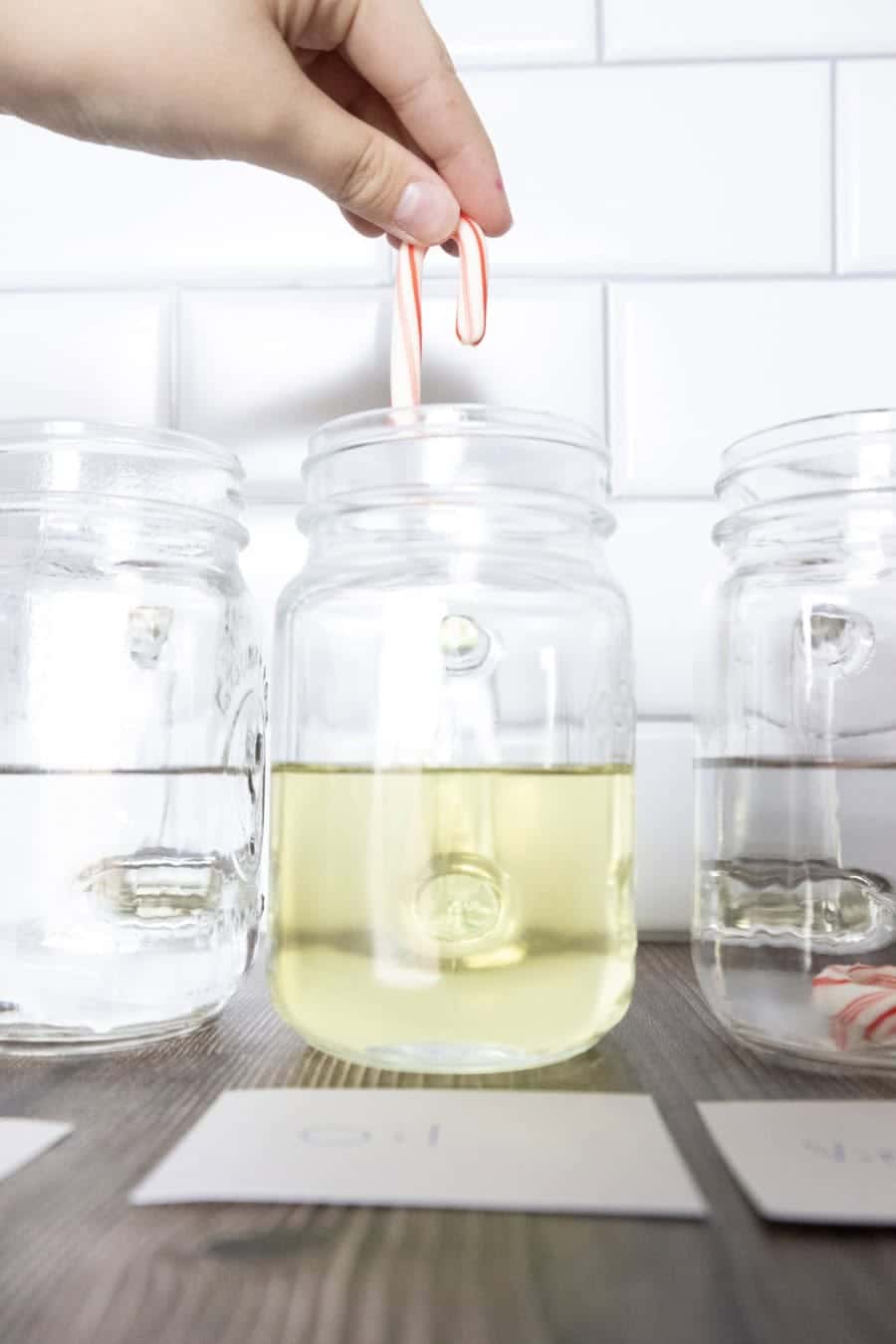
- Place one candy cane in each cup.
- Add the baking soda to the vinegar.
- Add the Alka Seltzer to one of the cups with warm water
- Observe and record results on the worksheets starting with the time the candy cane is first placed in the liquid.

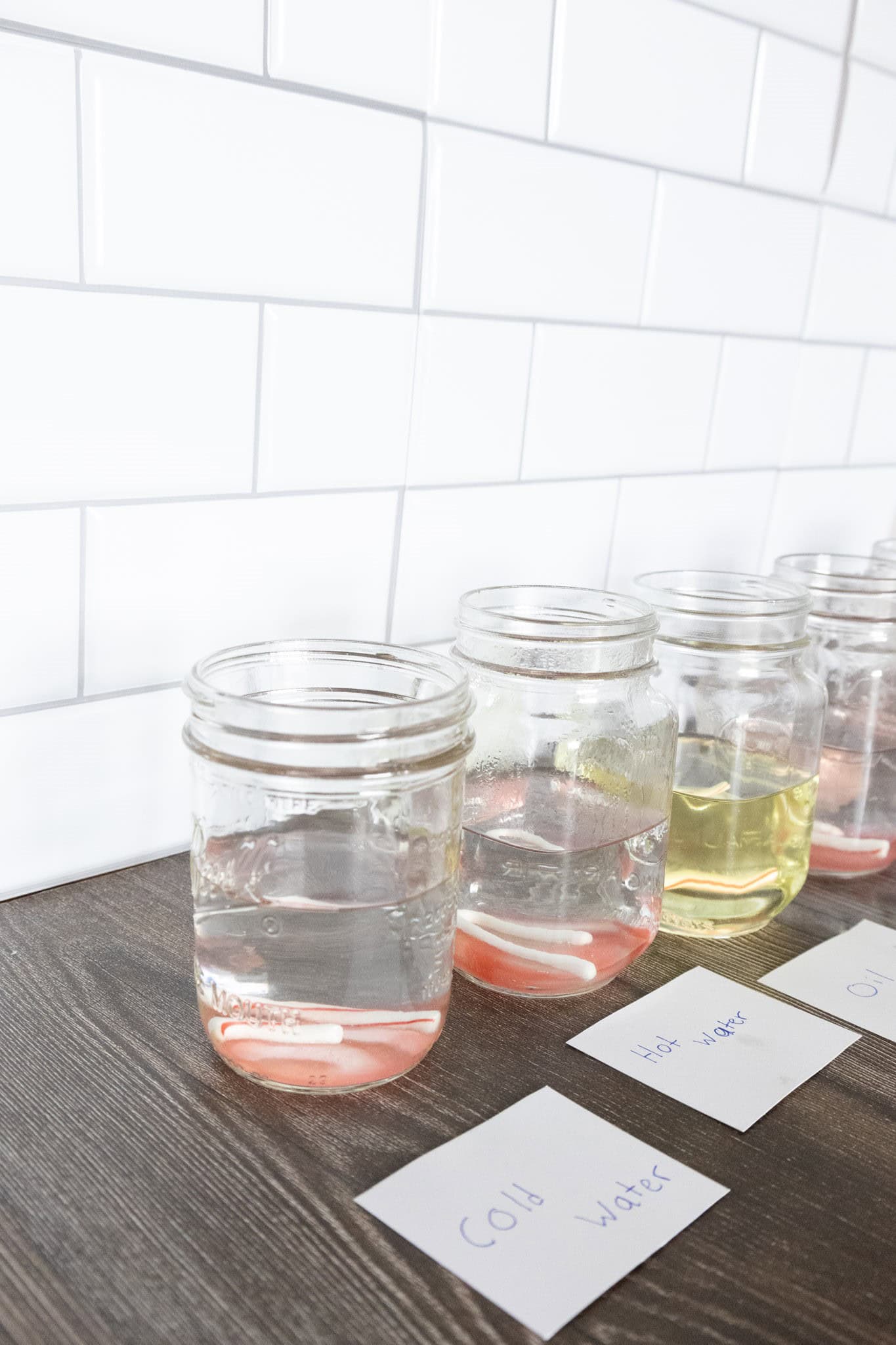
You can see our experiment photos below along with the explanation of what happened in each container.
Dissolving Candy Canes Experiment in Pictures
Here are our step-by-step photos.



What Happened in this Experiment?
Solubility in Our Experiment
Our candy cane experiment explored how a candy cane(the solute) dissolves in different liquids (the solvent): warm water, cold water, Alka-Seltzer and water, vinegar, and vinegar mixed with baking soda. Each liquid has different properties that affect the solubility of the candy cane.
Remember, solubility is the ability of a substance (in this activity, the candy cane) to dissolve in a liquid (in this activity, the water, oil, vinegar, etc.)
Here is what was happening in each container:
Warm Water
Warm water has higher energy than cold water because the heat causes water molecules to move faster, increasing the chances of collisions with the candy cane molecules. As these molecules collide, they work to break the bonds holding the sugar and flavoring together in the candy cane.
This causes the candy cane to dissolve faster in the water and demonstrates a high solubility of the candy cane in warm water. Remember, solubility is the ability of a substance to dissolve in a liquid.
Cold Water
Cold water molecules move more slowly than warm water molecules. This slower movement results in fewer collisions with the candy cane molecules, making it harder for them to break apart. Therefore, the candy cane dissolves more slowly in cold water, which means it has lower solubility compared to warm water.
Alka-Seltzer and Water
When we mix Alka-Seltzer with water, a chemical reaction occurs that produces carbon dioxide gas. The bubbles created during this reaction agitate the solution, increasing the movement of both the water and candy cane molecules. This mixing helps to break the bonds in the candy cane, which makes it dissolve faster. This means it has higher solubility.
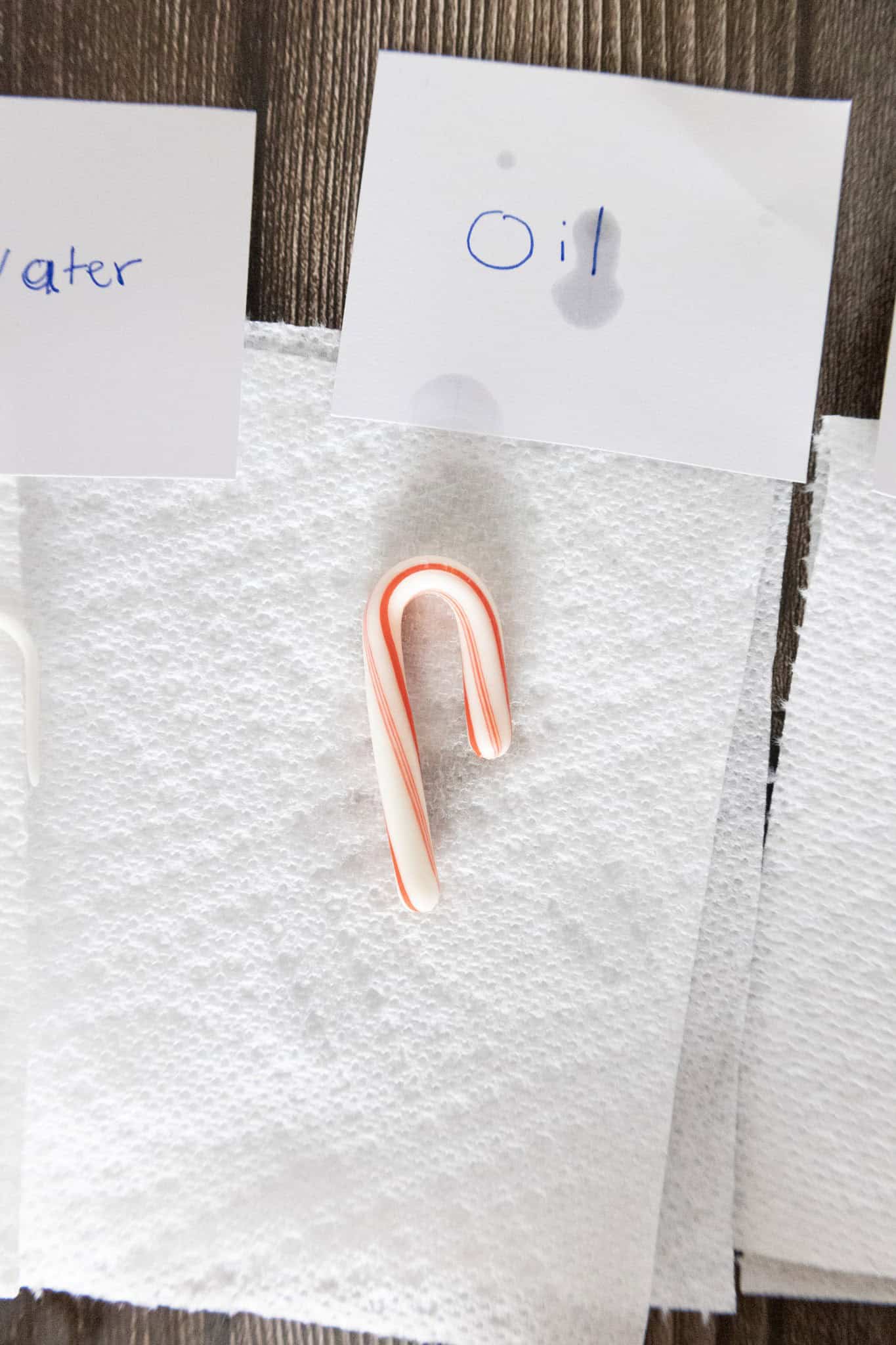
Oil
To best understand what happened with the candy cane placed in the cooking oil, we need to talk about polarity. We have a detailed lesson on the properties of water, in which we discuss polarity that you might want to use as a follow-up to this activity.
A water molecule consists of two hydrogen atoms and one oxygen atom. It has two ends, and the two positively charged hydrogen atoms at one end and the negatively charged oxygen atom at the other end give the molecule two poles.

This combination of atoms makes water a polar molecule. Polar molecules have a negative side and a positive side. When we mix water and oil, what happens? They don’t mix or they repel each other. This is because oil has nonpolar molecules. This means they have a more even distribution of charge. (Unlike water that is positively charged on one end and negatively charged on the other.)
In a nonpolar bond, atoms share electrons equally, thus there is no partial positive or negative charge between the atoms.
Polar and nonpolar molecules tend to not be attracted to each other. In other words, polar and nonpolar molecules repel each other.
The sugar in candy canes is glucose and it is polar. In the illustration here the O-H (oxygen-hydrogen) bonds, the oxygen bonds are more negative than the hydrogen. This causes a negative charge on the oxygen parts and a positive charge on the hydrogen part. This makes the glucose molecule polar.
So, the polar glucose repels the nonpolar oil molecules. Instead of dissolving, the candy cane will simply sit in the oil without breaking down into smaller particles.


Vinegar
Vinegar is an acidic solution, which can increase the solubility of the candy cane. The acetic acid in vinegar interacts with the sugar molecules in the candy cane and breaks them down more effectively than water alone. Compare the water-only candy cane with the vinegar-only candy cane. Did the vinegar candy cane dissolve more quickly than the candy cane in water? The vinegar does not dissolve the candy cane more quickly, which means the candy cane has a higher solubility in water.
Vinegar and Baking Soda
In this mixture, the chemical reaction between vinegar and baking soda creates a lot of bubbles because when the acid in the vinegar interacts with the baking soda, carbon dioxide gas is created. We see this gas in the form of bubbles. The fizzing creates mixing in the liquid, which helps to break apart the candy cane more quickly. This shows us how a chemical reaction and physical process demonstrate that the combined effects of chemical reactions and physical agitation can lead to increased solubility.
Three factors played a role in how quickly the candy cane dissolved:
- Temperature: Higher temperatures increase molecular movement, which speeds up the dissolving process.
- Agitation: Stirring or shaking the liquid can help mix the candy cane with the liquid, leading to faster dissolving.
- Chemical Reactions: Some liquids, like vinegar, can chemically interact with the candy, speeding up the dissolving process.
Request the Dissolving Candy Canes Free Printable Lesson

I hold a master’s degree in child development and early education and am working on a post-baccalaureate in biology. I spent 15 years working for a biotechnology company developing IT systems in DNA testing laboratories across the US. I taught K4 in a private school, homeschooled my children, and have taught on the mission field in southern Asia. For 4 years, I served on our state’s FIRST Lego League tournament Board and served as the Judging Director. I own thehomeschoolscientist and also write a regular science column for Homeschooling Today Magazine. You’ll also find my writings on the CTCMath blog. Through this site, I have authored over 50 math and science resources.