


Frog Unit Study Resources

Get my kids to any pond or stream and they will instantly start looking for frogs. They try to capture quick, tiny frogs and those big, green bullfrogs. They’ve had them in nets and buckets, on fishing lines, and in hands. The kids are fascinated by them.
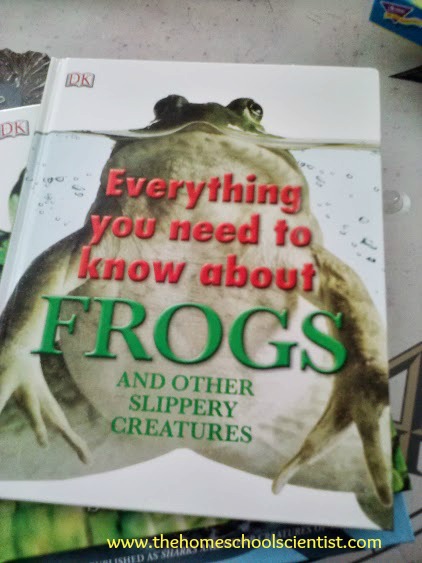
Recently, DK Publishing sent us this amazing book – Everything You Need To Know About Frogs and Other Slippery Creatures. This book is more of what DK is known for – thought-provoking facts and fabulous images that draw the reader in. This book only added to the kids’ interest in frogs and toads!
*This post contains affiliate links. Thanks for supporting The Homeschool Scientist.
Did you know?
- Frogs don’t usually drink water like we do. They absorb the moisture they need through their skin.
- Snakes aren’t the only animals to shed their skin. Frogs shed their skin, as well. We don’t see this skin like we do snake skin because the frogs eat their old skin!
- Amphibians and reptiles are found on every continent except Antarctica.
- Gila monsters only eat 5 -10 times per year.
- The Chinese giant salamander is the world’s largest amphibian. It can grow up to 6 feet long.
More Frog Study Links
Frogs make a fascinating unit study. Books like the DK book mentioned about are a great starting point. Here are some additional links packed with great information and activities to help your kids learn more.
Life Cycle Of A Frog Lesson and Printables
What Makes The Frog’s Tongue So Cool?
Virtual frog dissection and resources from the University of Arizona
Virtual frog dissection app – Yep. There’s an app for that!
Build a Frog activity and other information – a PDF from the US Fish and Wildlife Service
Create an origami frog
Frog Unit Study Pinterest Board
