


Teaching Kids About Germs


This is an easy, low-cost, activity you can quickly put together when teaching kids about germs. This activity and the accompanying printable pack give students a clear visual and understanding of how germs spread and why it’s important to do some simple things to help limit their exposure to germs, especially during cold and flu season.
Teaching kids about germs was a topic I covered when teaching abroad on the mission field. We had limited supplies and internet access, so I improvised with what was available. It was very effective, and the students were so excited to try this truly “hands-on” activity.
To introduce the germ activity to my students, we discussed bacteria and viruses and looked at electron microscope images I was able to download. The first one we looked at was Dengue fever, since we were in a location where Dengue was a threat.
I have created a free printable based on the activities we did. You can request this free resource below. I hope you find it a helpful resource when teaching kids about germs.


Human respiratory syncytial virus (HRSV) Source: Hans R. Gelderblom (2002)/RKI


What Are Germs?
As we start teaching kids about germs, we need to start with the basics–What is a germ?
A germ is a tiny living organism, too small to see without a microscope. There are different kinds of germs, like bacteria and viruses.
Some germs are harmless, but others can make people sick. Germs are everywhere around us, on surfaces, in the air, and even in our bodies.
When harmful germs get into our bodies, they can cause coughs, colds, or other illnesses. But, our bodies have a defense system called the immune system. It’s like a team of soldiers that works to find and fight off these germs, helping us stay healthy.
Bacteria: Bacteria are single-celled organisms living inside or outside the body. Not all bacteria are harmful, and some are even helpful.
Viruses: Viruses are smaller than bacteria and can’t live without a host (like a person’s body). They can cause colds, flu, and other illnesses.
If you want to see what types of bacteria are hanging around your home, then check out our Growing Bacteria in Agar activity. It’s a blend of “ewwww” and “Whoa!”
How Our Bodies Fight Germs
Your skin is the largest organ of your body and acts like a strong barrier by helping to stop germs from getting inside and making you sick.
If germs enter through a cut or our mouth, our body has other ways to fight back.
When germs enter our body, the immune system recognizes them as invaders and sends antibodies ad white blood cells to attack the germs.
Antibodies are proteins that act like special defenders of our body. Each antibody is designed to recognize a specific type of germ.
The antibodies attach to bacteria and viruses and help prevent these germs from causing harm.
White blood cells then surround and destroy the germs or produce chemicals that kill them. White blood cells are also called leukocytes and are the clean-up crew inside our bodies.
White blood cells come in different types, each with its own job. Some surround and swallow up germs, while others release substances to destroy them.
White blood cells and antibodies communicate with each other and share important information to help our body’s immune system work well and keep us healthy.
If the body encounters the same germ again, the immune system remembers it. This memory helps the body respond faster and more effectively to prevent illness.
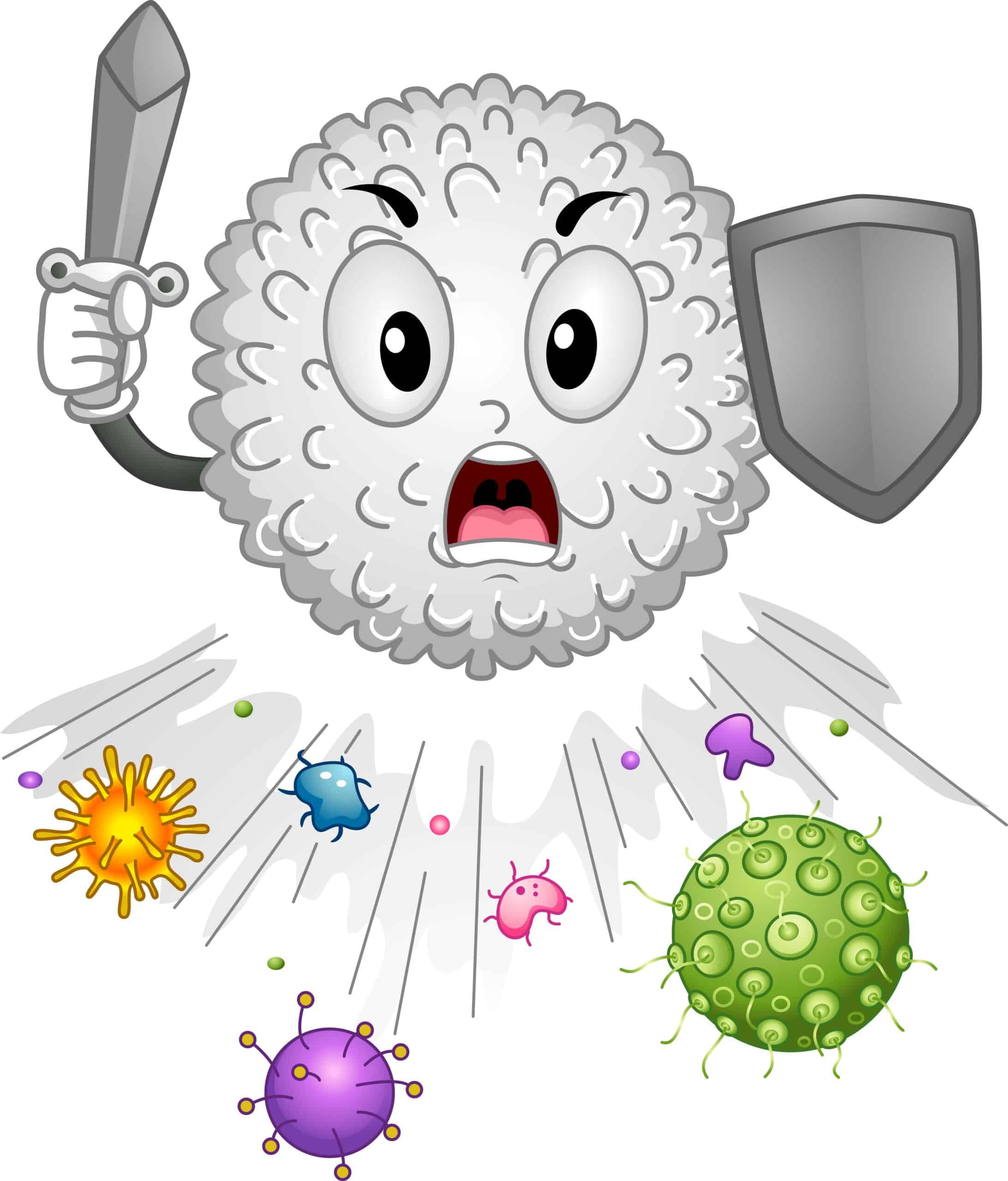
Sometimes, the immune system needs some help to fight the germs. That’s when we might get a fever. A fever is our body’s way of raising its temperature to kill germs. It’s like turning up the heat to make the invaders uncomfortable.
Our immune system is always working hard to keep us healthy. But we can also help by washing our hands regularly, eating nutritious foods, and getting enough sleep.
By taking care of our bodies and supporting our immune system, we can stay strong and fight off those pesky germs.

How Germs Get On Our Hands
Touching Things: Germs can be on surfaces and objects we touch, like doorknobs, toys, or even computer keyboards. When we touch these things, germs can stick to our hands.
Sneezing and Coughing: When someone sneezes or coughs, tiny droplets with germs can land on our hands. If we touch our face after that, the germs can enter our bodies through our eyes, nose, or mouth.
Not Washing Hands: If we don’t wash our hands regularly, the germs on our hands can stick around and increase the risk of getting sick when we touch our face or eat.
Before we move onto the activity, I want to share a resource that pairs really well with teaching our children about germs. We listen to a lot of audiobooks, especially biographies. Our favorite series is the Heroes of History Series. We have listed to over 25 of their titles. I wrote a review of three biographies from this series; you can read that review here.
The biography of Clara Barton was fascinating! The product description indicates the book is for ages 9 to 12, but all ages (even adults) will thoroughly the remarkable life story of Clara Barton.


Teaching Kids About Germs – “Hands-On” Germs Activity
We have prepared a free printable resource filled with informational write-ups and germ activities for kids. It is geared toward elementary grades, but you may want to check it out for other grade levels.
Below is one our favorite germ demonstrations. Get the entire printable pack using the sign-up form below the actvity box.
Teaching Kids about Germs – Getting “Hands On” with Germs
Materials
- Cooking oil
- Cinnamon
- Balloons
- Clear paper cups
- Soap and water for clean up
Instructions
- Blow up the balloons. Give each student an inflated balloon and two clear plastic cups.
- Pour a little oil onto each child’s hands and have them work the oil in well to their hands, then sprinkle their hands generously with cinnamon. You could use glitter, but cinnamon makes less mess and smells good! Students should work the cinnamon into their hands. It will feel very gritty. Their hands should be nice and “germy.”
- Next, have each student pick up their balloon. Have them make a handprint with each hand on the balloon. What do they see on the balloon?
- Have each student pick up one of their clean plastic cups. What do they see? Are there more or less germs on the glass than on the balloon? Going between the cups and balloon, keep “spreading the germs.”
- Alternate between the cups and balloon; keep “spreading the germs.”
- Wash hands and surfaces with soap and water when done. Complete the discussion questions either via discussion or by completing the discussion worksheet. Download the printable pack for the discussion questions.


Get the Free Printable – Teaching Kids About Germs
Please fill out the form below to receive the printable. You will be added to our email community. You may unsubscribe at any time by using the link in our emails. Thank you and enjoy teaching kids about germs!
Additional Resources for Teaching Kids About Germs
Here are some resources to use when teaching kids about germs:
- Growing Bacteria in Agar (This is quite interesting!)
- A list of immune system resources we have put together
- Learning about blood
- The Journey of a Germ video
This post contains Amazon affiliate links, as this is how we are able to keep almost all of our resources free. Thank you for supporting The Homeschool Scientist.

I hold a master’s degree in child development and early education and am working on a post-baccalaureate in biology. I spent 15 years working for a biotechnology company developing IT systems in DNA testing laboratories across the US. I taught K4 in a private school, homeschooled my children, and have taught on the mission field in southern Asia. For 4 years, I served on our state’s FIRST Lego League tournament Board and served as the Judging Director. I own thehomeschoolscientist and also write a regular science column for Homeschooling Today Magazine. You’ll also find my writings on the CTCMath blog. Through this site, I have authored over 50 math and science resources.