


Extracting DNA from Fruit

Once you start extracting DNA from fruit, it’s hard to stop! It’s a simple process and is engaging for students. Over the years, we’ve extracted DNA from bananas, strawberries, and even pumpkin, each with slightly different results. So, we decided to try extracting DNA from blueberries.

We’ve also put together a DNA lesson (written by a genetic counselor) and a build-a-DNA-model activity.
We also had a great time playing Variation, a DNA card game. You can read our review here.
Some fruits mash easily and release DNA quickly. Others take more effort, but spark great conversations about cell structure, water content, and why all living things do not behave the same way in experiments.
That curiosity is what keeps us coming back to extracting DNA from fruit again and again.
This time, we decided to extract DNA from blueberries.
Blueberries may seem like an odd choice since they are so small. But that’s exactly what makes them interesting. Different fruits contain different number of cells, different amounts of water, and different compounds that affect how easily DNA can be released and seen.
So, which fruit is the easiest for DNA extraction?
In our experience, strawberries are often the most forgiving for beginners. They have soft tissue, lots of water, and multiple copies of DNA in each cell, which makes the results dramatic and fast. Bananas are a close second, though their thicker texture can make filtering a little slower.
Blueberries fall somewhere in the middle. They don’t always product the biggest clumps of DNA, but they’re reliable, accessible, and excellent for helping students understand that real science doesn’t always give identical results, and that’s okay.
In this activity, we’re extracting DNA from blueberries to compare what we see with our previous experiments and to explore an important scientific question: Why does the same experiment look different depending on what you test?
Planning the Comparison
- Determine which fruit you want to use. As mentioned before, we have extracted DNA from fruites, such as bananas, strawberries, and pumpkin.
- Determine in which order you will do each fruit extraction. It shouldn’t take more than 15 minutes per fruit, so you can easily get 4 fruits done in an hour. Or, if you have multiple children in your homeschool, or are doing this in a co-op, classroom, or group setting, you can assign a different fruit to each group. Note: If pumpkin isn’t available, substitute another fruit. It adds interest to try a fruit with a harder exterior, like butternut squash or acorn squash.
- Gather the materials. All the materials are the same, except for the fruit. I highly recommend using 70% or 90% isopropyl alcohol. The alcohol helps force the DNA to precipitate out of an aqueous solution. Placing the alcohol in the freezer for at least an hour prior to the experiment helps maximize the precipitation of the nucleic acids.
- Download our free lesson printable introducing DNA to your student(s). You’ll also receive the worksheets that go with the comparison experiment. The email you will receive is linked to three printables – our DNA introductory lesson with instructions on extracting DNA from a banana, a printable about extracting DNA from strawberries, and the blueberry DNA and DNA Comparison worksheets. Use one or all three.
- Review the comparison chart and discussion questions. Here are just a few of the questions in the printable lesson:
- Which fruit do you think will produce the most visible DNA? Why?
- Do you think the fruit’s softness will affect the process or the amount of DNA we see?
- Do you think juicier fruit be easier to work with and have more DNA? Why or why not?
- Could thicker fruit pulp make the DNA harder to see?
- Do you think the color of the fruit affect what we observe?
Directions for Extracting DNA from Fruit and Blueberries.
Below are the instructions for extracting DNA from blueberries. When you are comparing to extracting from strawberries, banana, and/or pumpkin use the links here: bananas, strawberries, and pumpkin
Materials
- 2-3 blueberries
- 1 sandwich-size baggie
- Rubbing alcohol (Over 70% works best)
- Small glass or plastic jar
- Coffee filter
- Rubber band
- Dish soap
- Salt
- Water
- Small bowl
- Wooden skewer
Instructions:
- Place the bottle of rubbing alcohol in the freezer for at least 30 minutes.
- Place the blueberries into the baggie, seal it, and mash them.
- In the small bowl add 2 tsp of water, ½ tsp of dish soap, and a pinch of salt. Stir to mix.
- Add the soap mixture to the mashed-up blueberries. Squish the liquid around with the blueberries and mix it well. Set aside.
- Lay the coffee filter over the jar, push the filter into the jar, and secure it with the rubber band.
- Carefully pour a small amount of the blueberry mixture into the coffee filter. The liquid will slowly drip into the jar. Continue to add a small amount of mixture at a time, this may take a few minutes.
- Remove the filter. Fill the jar ¾ of the way full of the chilled rubbing alcohol. Tilt the jar and slowly pour down along the side of the jar.
- Watch as the blueberry DNA begins to float and swirl around.
- Use the skewer to gently grab the blueberry DNA.


DNA Resources You Might Like

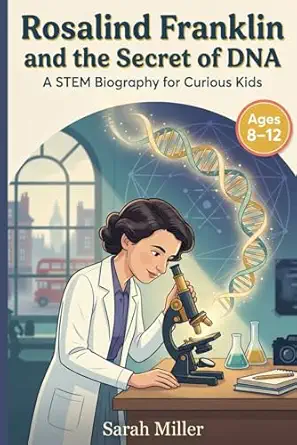
For younger students, ages 8-12

For high school students

I hold a master’s degree in child development and early education and am working on a post-baccalaureate in biology. I spent 15 years working for a biotechnology company developing IT systems in DNA testing laboratories across the US. I taught K4 in a private school, homeschooled my children, and have taught on the mission field in southern Asia. For 4 years, I served on our state’s FIRST Lego League tournament Board and served as the Judging Director. I own thehomeschoolscientist and also write a regular science column for Homeschooling Today Magazine. You’ll also find my writings on the CTCMath blog. Through this site, I have authored over 50 math and science resources.