


The Rock Cycle Explained – Activities & Worksheets


Rocks are everywhere! We use them to construct highways, homes, churches, statues, and more. Before rocks end up as part of concrete or before rocks find their way into the pocket of a curious child, those rocks have undergone many natural processes as part of the rock cycle. Below the rock cycle is explained.
The Rock Cycle Explained
Rock is the most abundant thing on Earth. Rock is right under our feet! Let’s look at what rock is, how it’s different from a mineral, the 3 types of rock, and the rock cycle. Understanding the 3 types of rock helps us understand the natural process as the rock cycle is explained.
In this post we also have a free printable. The sign-up box for the free worksheets is located near the bottom of this post.
If you’re studying earth science, you may want to check out our post on earthquakes and tsunamis.

The Rock Cycle Explained – Let’s Start with Rocks vs. Minerals
Rocks can be sharp, smooth, round, jagged, colorful, and some can be plain-looking. As different as they may appear, all rocks have something in common, they are all made up of minerals.
Rocks are formed by a combination of different minerals.
There are over 4,000 known minerals on the Earth today. Only one-hundred minerals are considered common. Less than twenty of these will form rocks.
A rock is a naturally occurring solid substance made up of one or more minerals, mineraloids, or organic materials.
Minerals are chemical compounds or sometimes are a single element. A mineral is naturally occurring and is inorganic. Inorganic means the substance is not formed from living organisms or their remains. Minerals have a crystalline structure and a specific chemical composition.
Pictured here are minerals from the Grandview Mine. These samples contain azurite (dark blue), gypsum (colorless, rhombohedral crystals), malachite (green), and smithsonite (yellow).

Samples of Minerals

Micah

Quartz with gold

Gympsum
Minerals can be identified based on their physical and chemical properties, such as color, hardness, luster, cleavage, and specific gravity. Minerals are important for a wide range of purposes, including building materials, electronics, and the production of metals and other industrial products.
Minerals are used in a variety of household and office products that we use everyday. Others are cut, polished and valued for their beauty. We call these special minerals, gems. Diamonds, sapphires, amethyst and rubies are all called gems.
- The mineral graphite is combined with clay to form the “lead” that is used in our pencils.
- Halite is a mineral found on every grocery store shelf, as well as in most homes. Commonly known as rock salt, halite is formed from evaporating sea water. Found in sedimentary rocks, this mineral is mined in large caves around the world.
- Talc is the softest of all the minerals. It has a smooth, somewhat greasy feel and is found in metamorphic rocks. Talc is the main ingredient in many cosmetics, including face powder and baby power. It is also used as a filler for paints.
The Rock Cycle Explained – 3 Types of Rock
As the rock cycle is explained (below), it’s important to understand the 3 main classifications or types of rocks we will learn about during this adventure: igneous, sedimentary, and metamorphic. Each group of rocks has unique characteristics that help us identify them.
What are Igneous Rocks?
Igneous rocks are rocks that are formed from the cooling and of magma or lava. Magma is molten rock that is found beneath the Earth’s surface. Once magma erupts, it is called lava.
When magma or lava cools and solidifies, its minerals crystallize and form solid rock. Igneous rocks can be classified into two categories: intrusive or extrusive. Intrusive rocks form beneath the Earth’s surface when magma cools slowly and solidifies, resulting in coarse-grained rocks like granite. On the other hand, extrusive rocks are formed when lava cools quickly on the surface, resulting in fine-grained rocks such as basalt.
Igneous rocks are the most abundant rocks on the Earth’s surface. There are two types of igneous rock extrusive and intrusive. Extrusive igneous rocks are formed when volcanoes erupt, spilling lava unto the earth’s surface. This extremely hot melted rock quickly cools and hardens once it reaches the surface. Because it cools quickly, crystals or holes formed within the rock will be extremely small. Examples include obsidian, basalt, and rhyolite.
Intrusive igneous rocks form when melted rock, called magma, becomes trapped under the Earth’s surface, forming a magma pool. As the trapped magma cools, large crystals, or holes, form within the rock. Examples of intrusive igneous rocks include granite, pumice, and diorite.
Some key characteristics of igneous rocks:
- Dark-colored
- Heavy
- Many have holes
- Usually made of two or mor different grain (tiny rocks) sizes
What are Sedimentary Rocks?
Sedimentary rocks are formed when sediments like sand, silt, gravel, and other very small pieces build up and then are compressed. Over time, the sediment is compacted, and the layers are cemented together to form a sedimentary rock.
Sedimentary rocks are found in many different environments, including river beds, ocean floors, and deserts. Sediment comes in different forms. It can be small grains of rock or small pieces of clay. These different types of sediment are what give a sedimentary rock its characteristics and appearance.
For example, sandstone is a type of sedimentary rock that is composed mainly of sand-sized grains of minerals or rocks, while shale is a type of sedimentary rock that is composed mainly of clay and silt-sized particles.
Sedimentary rocks are important because they often contain fossilized remains of plants and animals. They are also important resources for our everyday lives, as many sedimentary rocks are used as building materials, such as sandstone and limestone, or as a source of energy, such as coal.
Characteristics of sedimentary rocks:
- Smaller rocks are cemented together to make one.
- May have fossils
- Light colored
- Lightweight
- Small layers
Resources to Use with a Rock Study
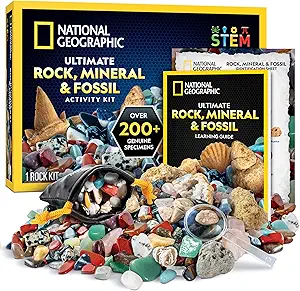
To better understand the rock cycle, it helps to take a look beneath Earth’s surface. These free Layers of the Earth’s Crust notebooking pages from Homeschool Helper Online give students a place to learn about and record what they discover about Earth’s crust, mantle, and core.



What are Metamorphic Rocks?
Metamorphic rocks are formed from the alteration of existing rocks through heat, pressure, and chemical processes. For example, when a sedimentary rock is subjected to intense heat and pressure, it can become a metamorphic rock.
There are two kinds of metamorphism – contact and regional. Contact metamorphism is when the rock surrounding molten igneous rock is baked.
Regional metamorphism is the change that rock undergoes when rocks are buried deep beneath the Earth’s surface and subjected to high temperatures and pressures, which cause them to change in composition and texture.
Regional metamorphism is often associated with mountain-building processes. As the rocks are buried deeper, they are subjected to increasing temperature and pressure, which causes them to undergo metamorphic changes.
Examples of rocks that can undergo regional metamorphism include shale, sandstone, and limestone. Shale can be transformed into slate, while sandstone can be transformed into quartzite. Limestone can be transformed into marble.
Some key characteristics of metamorphic rocks:
- Grains are pressed together tightly.
- Layers
- Stripes of light and dark colors
- Lightweight
- Will make a “cling” sound when hit together instead of a “clunk”
The Rock Cycle Explained and Diagram
Now that we know about the 3 types of rock, it’s time to explain the rock cycle! Whenever I teach the rock cycle, I always grapple with whether to teach about the types of rock first or present the life cycle first.
The rock cycle is a natural process that explains how different types of rocks are formed, changed, and transformed over time. The rock cycle is a never-ending cycle, with rocks constantly changing from one type to another through different geological processes.
The rock cycle is explained as a diagram to show best the different conditions that cause rocks to change and how new rocks are formed. Many of these conditions occur beneath the Earth’s surface where we cannot see them, such as melting, increasing pressure, and intense heat. Other conditions occur on the Earth’s surface, such as erosion, deposition, and weathering.
So, erosion, deposition, and weathering are 3 of the 7 parts of the rock cycle. All seven are listed below the rock cycle diagram.
Looking at the chart below, let’s start with magma. When magma or lava cools and solidifies, igneous rock is formed.
Over time, as the igneous rock is exposed to wind, rain, hail, and other weathering, the rock begins to break down into various size pieces. These pieces are called sediment. The sediment can get carried away by water (rain, rivers, streams) and deposited. Layers of sediment build up and get compacted. They get cemented together. (Think of cement sidewalks, parking lots, and roads that you see. Look closely at the cement. What do you see?)
As sedimentary rocks is buried deeper into the Earth’s crust, it is exposed to pressure and heat. These two intense forces (pressure and heat), cause the rock to become metamorphic rock. As the metamorphic rock is exposed to more heat for longer periods of time, it begins to melt. When the rock melts it becomes magma.
You can also see in the chart that igneous rock can also be exposed to heat and pressure, without becoming sediment and become metamorphic rock.
What other relationships do you see between the three different types of rock and the forces of heat and pressure? The arrows in the rock cycle chart show how these forces interact and create the geologic formations we see.
Processes in the Rock Cycle
- Weathering: Wind, water, temperature changes, and chemical reactions break rocks into smaller pieces.
- Erosion: The process of transporting broken-down rock pieces or sediments to new locations by water, wind, or ice.
- Deposition: Deposition is when sediment is laid down or deposited on the surface of the Earth or in a creek, pond, lake, river, or ocean.
- Compaction: When sediment accumulates, the weight of the top layers presses down on the bottom layers. Any air pockets and water in the bottom layers are squeezed out. Compaction is important to the formation of sedimentary rocks. Some of these include sandstone, shale, and limestone.
- Cementation: The process of binding the sediments together with minerals which act as a glue, forming sedimentary rock. Calcite, silica, and iron oxide are the most common minerals that work like cement (glue) to form sedimentary rocks.
- Metamorphism: The process of changing existing rocks by subjecting them to high temperatures and high pressure resulting in the formation of metamorphic rocks.
- Melting: When rocks reach the point where they melt and become molten. We call this molten rock magma when it is under the Earth’s surface. When magma comes out of a volcano, we call it lava. Rock melts when it is exposed to high temperatures and high pressure.
Rock Cycle Explained – Make a Metamorphic “Rock Slab”
We’ve spent a lot of time explaining the rock cycle and the 3 types of rocks, now, we’re going to demonstrate how metamorphic rock forms from sedimentary rock. We’ll be using a few slices of bread and heavy objects.
Make a Slab of Metamorphic Rock
Materials
- 2-4 pieces white bread
- 2-4 pieces whole wheat bread
- 1 ruler
- 1 pencil
- 1-2 paper plates
- 2-3 paper towels
- Several heavy books and some items that weigh between 8 to 10 pounds. We used a 10 pound hand weight
- Copy of the printable – see request box below
- 1-2 pieces Optional: You can also use other bread, like rye or pumpernickel and increase the number of total slices used.
Instructions
- Give each person 2 to 4 slices of white bread and 2 to 4 slices of wheat bread. We mixed and matched and used anywhere from 4 to 7 pieces. You may opt to add a third type of bread. (Rye, sourdough, pumpernickel)

- Measure width, length, and height of each piece of bread. ("Layer of sediment") Draw a picture and record measurements in box 1 of the lab sheet.

- Examine each layer of sedimentary (each slice of bread.) Do you see any small pieces of sediment? Record what you see in box 1 of the lab sheet.
- Stack the bread on a paper plate or paper towel. Line them up neatly. Lining them up uniformly helps make the effects of the heat and pressure more visible. This represents a sedimentary rock.

- Cover the “rock sandwich” with another paper towel.

- Place several heavy books on top of the covered bread. (We used two heavy textbooks.)
- After 30 minutes remove the books and paper towel.

- Repeat the measurements and fill out box 2 on the observation sheet.
- Next place the stack of bread carefully on the paper plate and cook in the microwave for 30 seconds.

- This will be hot, so use a dish towel or hot pads to remove it from the microwave. Place the dish back in your work area. Record what you see, carefully touch the top of the "rock slab." What does it feel like, record your observations in box 3 on the observation sheet.
- Cover the bread with a paper towel. Put the books back on top of the bread.
- Next, place the additional 10 pounds on top. We used a 10-pound hand weight.

- Wait another 15-20 minutes. Remove the heavy objects and paper towel. Measure again, record the results, and draw a picture in box 4 of the worksheet.
- Discuss what was observed. Review the questions below and on the worksheet.
- Compare the before and after.


Request the Rock Cycle Printables
Other Earth Science Resources
If you’re looking for some additional resources to go with a rock cycle or geology study, check these out:

I hold a master’s degree in child development and early education and am working on a post-baccalaureate in biology. I spent 15 years working for a biotechnology company developing IT systems in DNA testing laboratories across the US. I taught K4 in a private school, homeschooled my children, and have taught on the mission field in southern Asia. For 4 years, I served on our state’s FIRST Lego League tournament Board and served as the Judging Director. I own thehomeschoolscientist and also write a regular science column for Homeschooling Today Magazine. You’ll also find my writings on the CTCMath blog. Through this site, I have authored over 50 math and science resources.